


It is the middle of winter. Statsraad Lehmkuhl is crossing the Atlantic - and, as usual on the most demanding legs, cadets from the Royal Norwegian Naval Academy are on board.
It is 20 February 2026. Statsraad Lehmkuhl is sailing southwest of the Azores. Right now, there is little wind, a bit too little for Captain Marc Seidl’s liking, but only a few days ago it was blowing hard.
– We stay clear of the strongest wind systems, where winds can reach hurricane force. But we try to catch the outer edges of them to get a good following wind, around gale force is nice, so we can sail as much as possible of the 3,500 nautical mile crossing, he explains.

A lot can still happen
It is not cold at the moment. Both the sea and the air are around 16–17°C. But the Atlantic in winter is unpredictable, and the next port, Cádiz, Spain, is ten days away. A lot can still happen.
After Cádiz, the ship will head back out into the Atlantic, first to the Azores and then north to Brest, France, where she is scheduled to dock on 27 March.

On all these legs, cadets from the Royal Norwegian Naval Academy are on board. The timing is no coincidence. Testing themselves in the North Atlantic during winter is an important part of their education.
You do not gain experience without experiencing things firsthand, and there are few better ways to gain self-knowledge than the cramped living and hard work on board a sailing ship.

Two months at sea
The cadets joined the ship in Cartagena, Colombia, in mid-January and will remain on board for more than two months. Researchers and other participants sailing with the One Ocean Expedition usually stay only a few days to three or four weeks. Sailing with cadets as part of the crew is something special, Marc says.
– It’s great to have the cadets on board for such a long time and to see them develop from landlubbers into quite capable sailors.
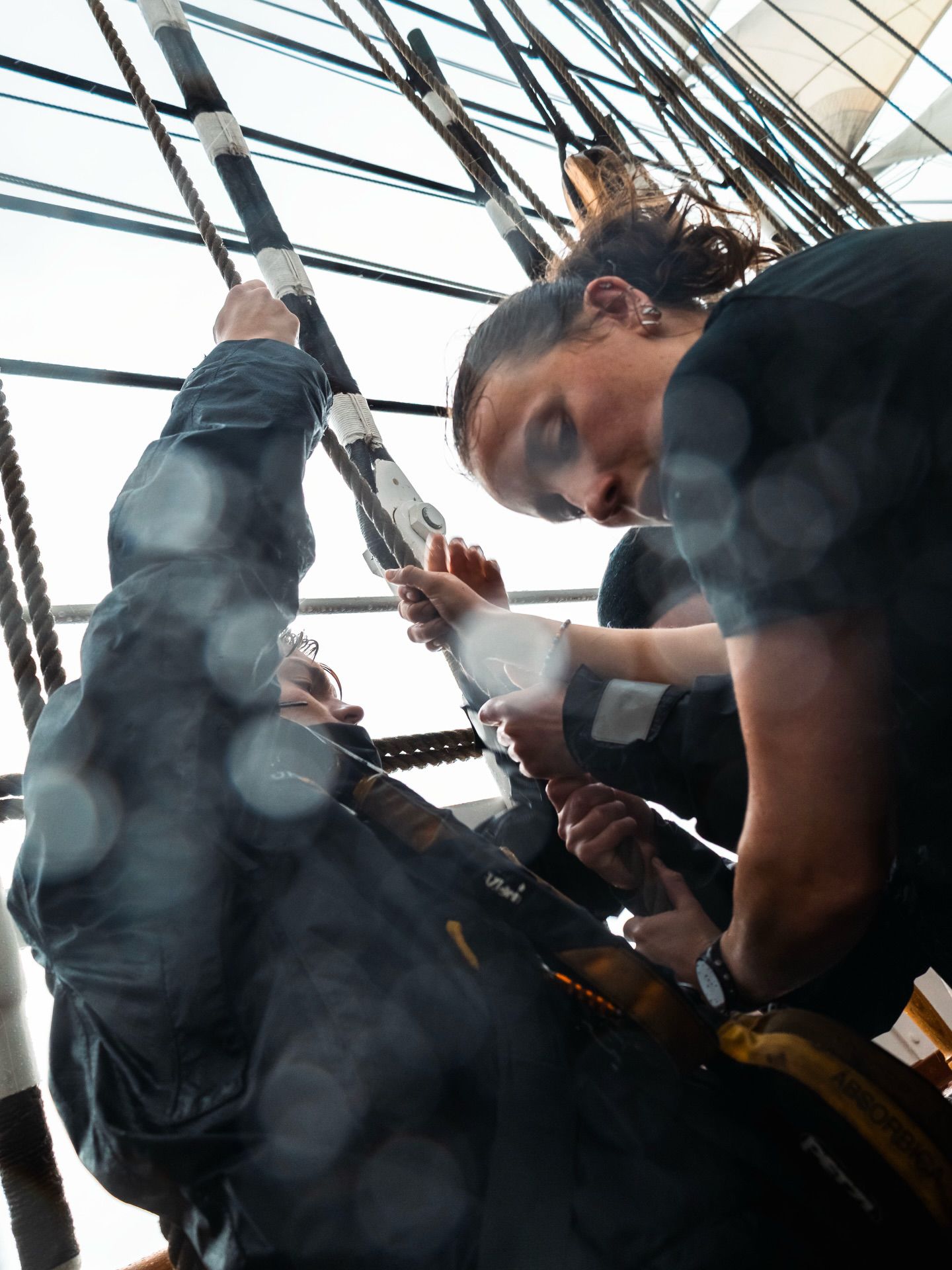
Cadets working the rigging. Photo: Andre Ingvoldstad
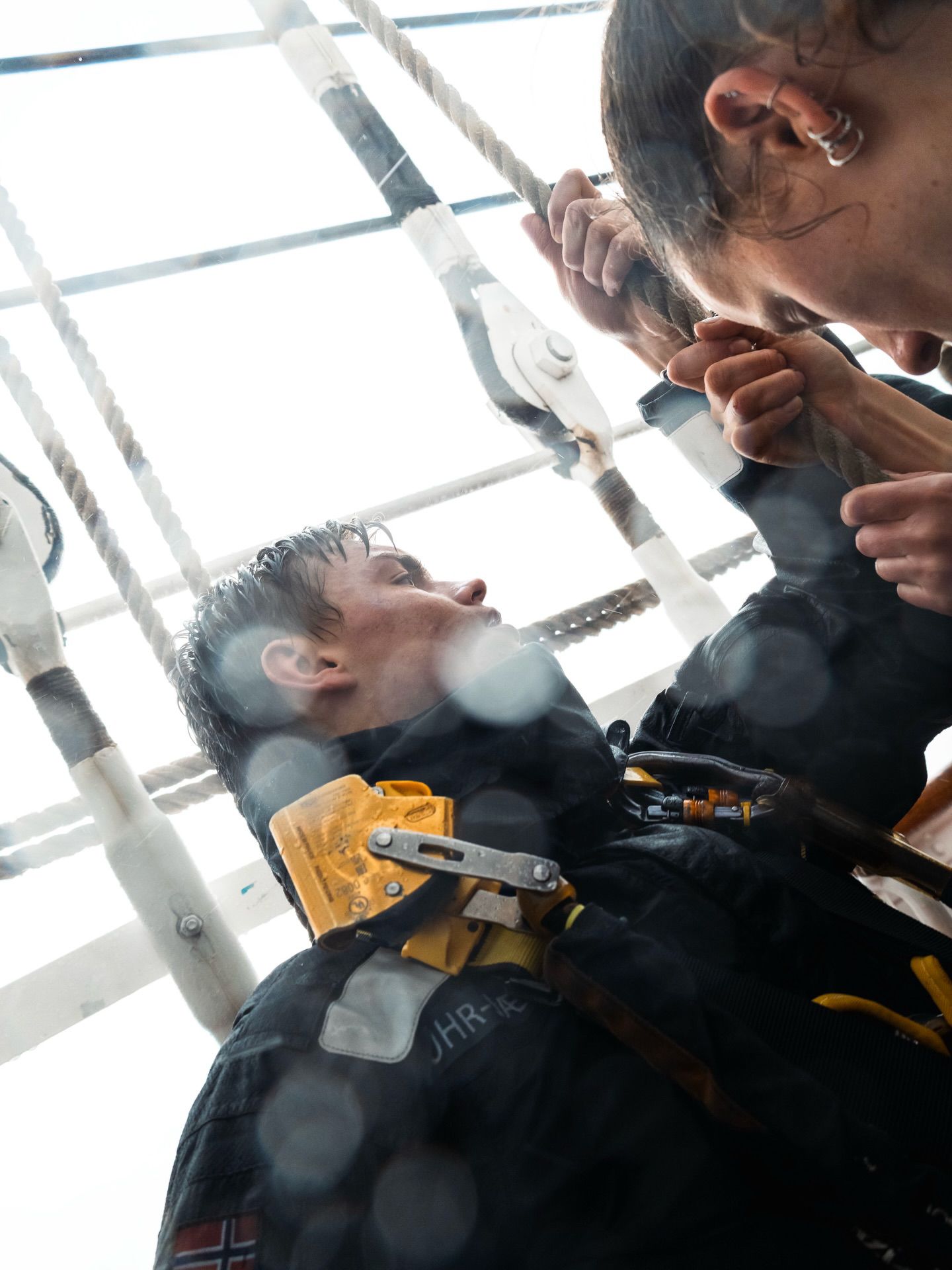
Cadets working the rigging. Photo: Andre Ingvoldstad
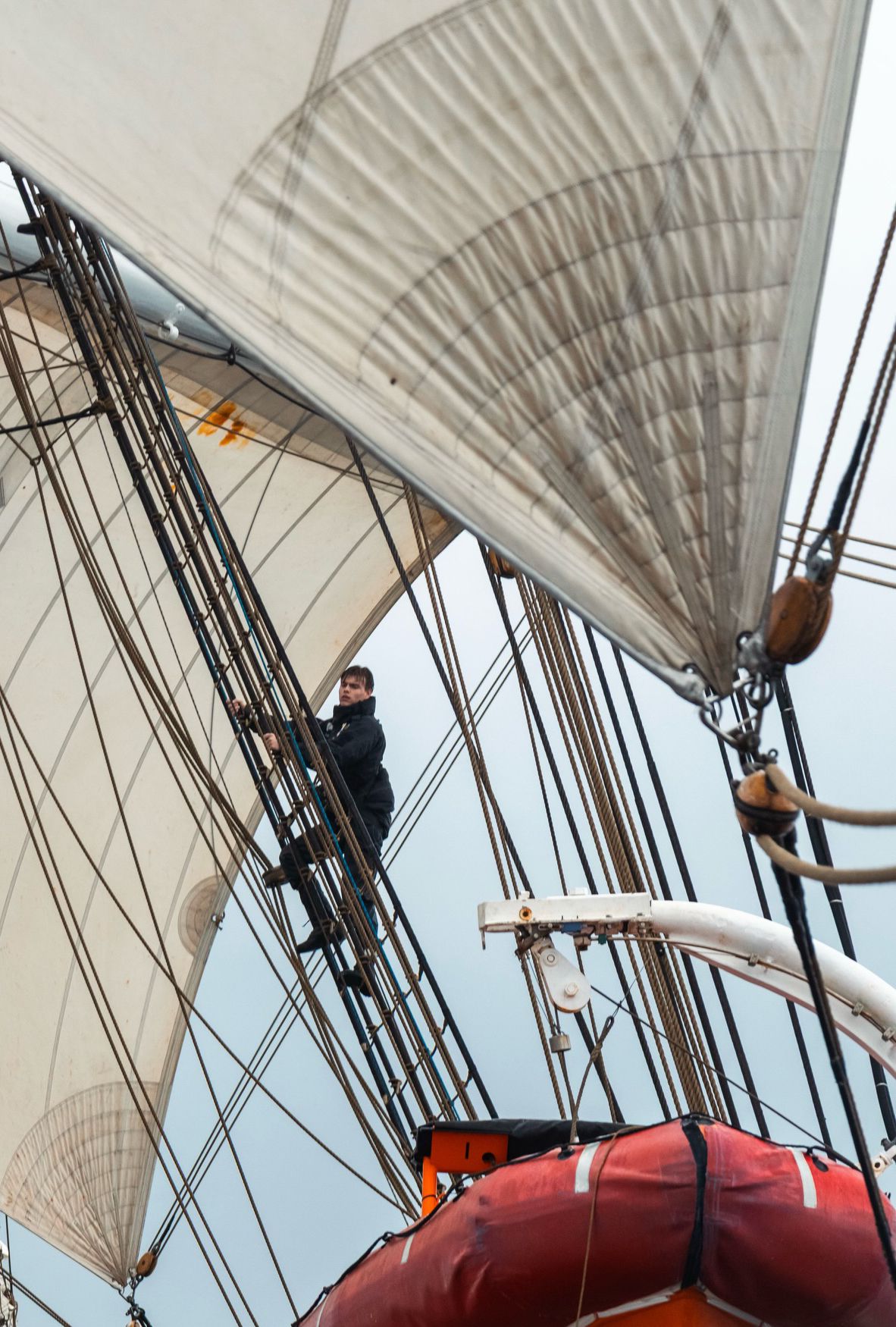
Cadets working the rigging. Photo: Andre Ingvoldstad
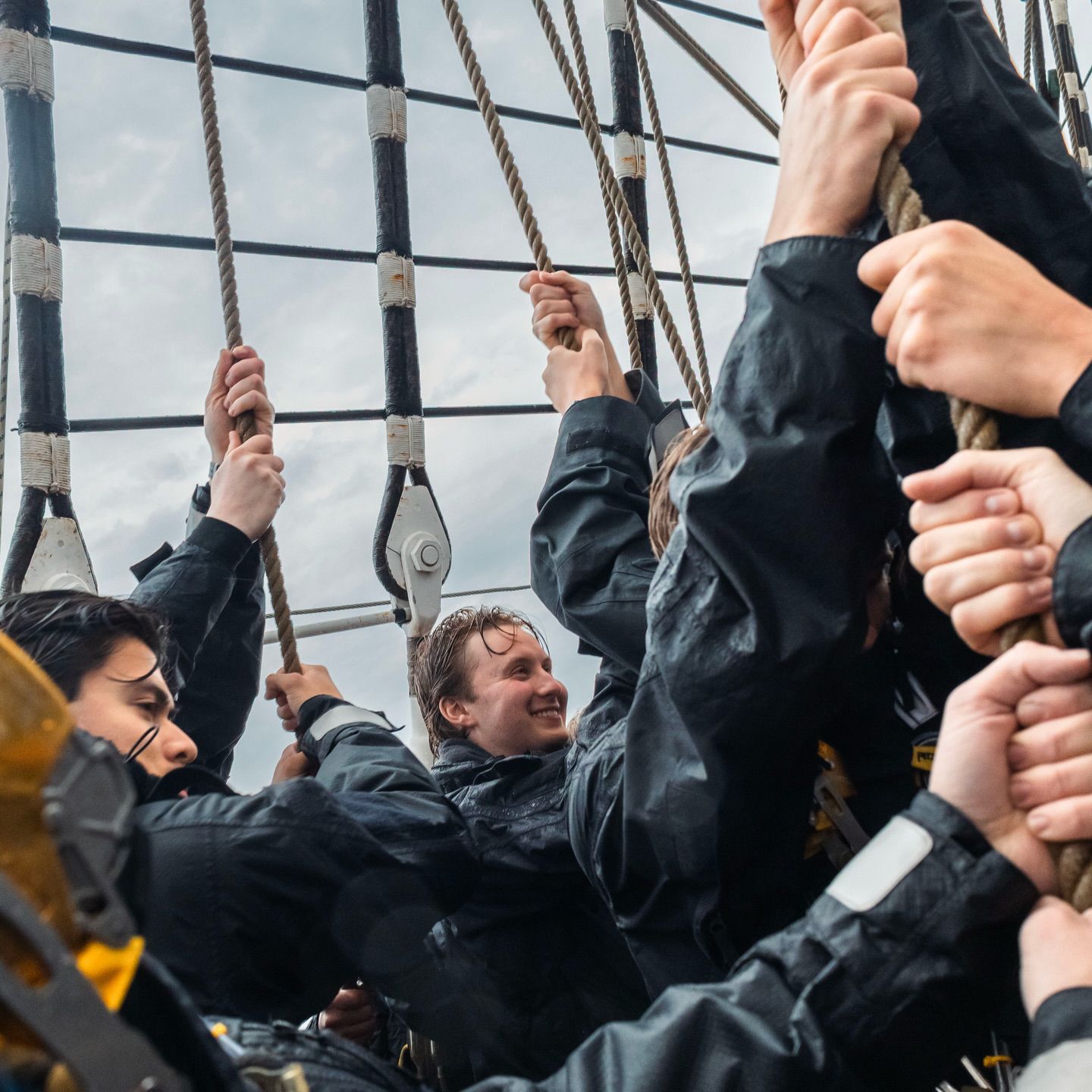
Cadets working the rigging. Photo: Andre Ingvoldstad
But he admits it can also be demanding.
– The cadets have their own programme to complete. This voyage is part of their bachelor’s degree, so they are busy with classes and also receive training in different military roles on board a ship.
Statsraad Lehmkuhl is currently under military command and sails with the naval ensign at the stern.
– The Naval Academy has appointed its own commanding officer responsible for the cadets, their training, and their programme ashore. But at all times, I as captain, together with the ordinary crew, have the overall responsibility for operations, safety on board, and logistics when we are in port, Marc explains.
Smart. Marc has done the math and counts this as his 29th Atlantic crossing on a sailing ship. His first was aboard his father’s vessel in 1974. You can read more about his childhood experiences at sea here.

The Simpsons
It has been 25 years since the Royal Norwegian Naval Academy first sent its cadets aboard Statsraad Lehmkuhl. What began as an urgent solution has grown into a close and successful partnership.
Marc smiles as he looks back.
– Not every class has been equally motivated. In the early years, it could sometimes be challenging to build an effective team spirit, he says.
– On one westbound voyage home from the United States, the wind suddenly picked up one evening and we urgently needed to take in the upper sails. When the civilian watch leader called down below deck for reinforcements, the reply came that they first had to finish watching an episode of The Simpsons! Thankfully, it’s not like that anymore. The cadets have become more skilled and more ambitious with every class.


