


There is an old saying among sailors - a captain has either already run aground, or will someday. On 16 July 1926, it was Gabriel Kielland's turn, on board Statsraad Lehmkuhl.
The sailing ship Grossherzog Friedrich August was built in 1914 as a training vessel for the German merchant fleet. After the First World War she was taken over by the British as a war prize. In 1921 the ship was brought to Norway and put into service training Norwegian cadets two years later.
Many of her voyages were along the Norwegian coast. The weather can be unpredictable, but the sounds, islands, skerries and shoals have long been well known and carefully marked. Cairns served as navigation marks, and Norway’s first lighthouse, Lindesnes Lighthouse, was first lit in 1655.
The Norwegian Mapping Authority was established in 1773, and systematic surveying of the coast began in 1785. Reefs and shoals were charted on nautical charts, making ships less dependent on carrying a pilot on board than before.

Hard aground
On 16 July 1926, Statsraad Lehmkuhl was proceeding under power toward Fredrikstad in the outer Oslofjord. Near Asmaløy in the Hvaler archipelago there was a heavy jolt - the ship had struck Vidgrunnen shoal and run hard aground.
The shoal was well known, clearly marked on the chart and even indicated with a navigation pole. Statsraad Lehmkuhl was firmly stuck, but fortunately the hull remained intact. Only a minor leak developed in the provisions store.
To prevent a sailing ship from heeling too much when wind fills the sails and presses on the rig, ballast is carried low in the hull. In this case, 400 tons of cobblestones, the same kind used to pave city streets, were stowed in the ship’s bottom.
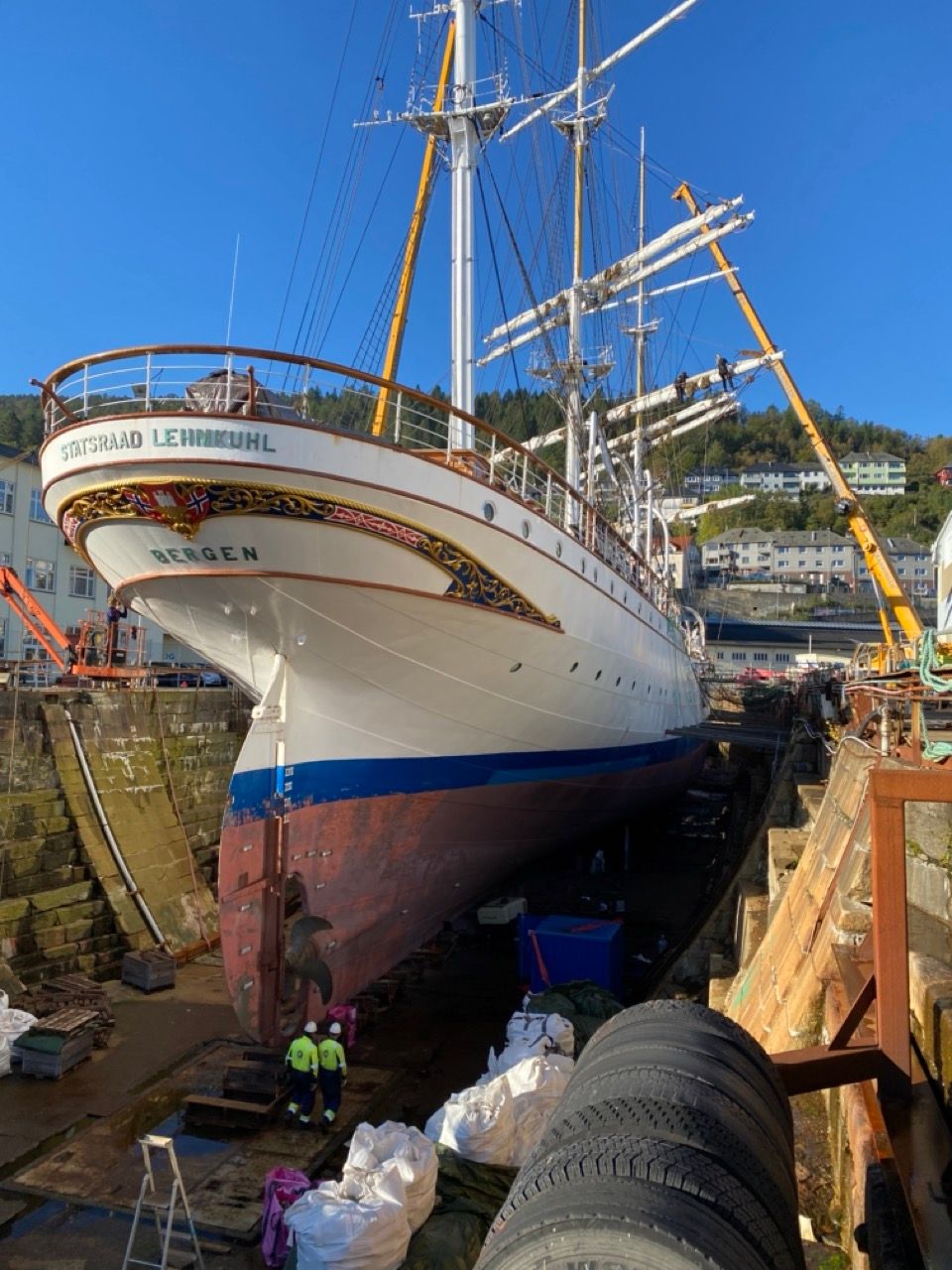
Statsraad Lehmkuhl in dry dock in the autumn of 2024. Photo: Ronald Toppe
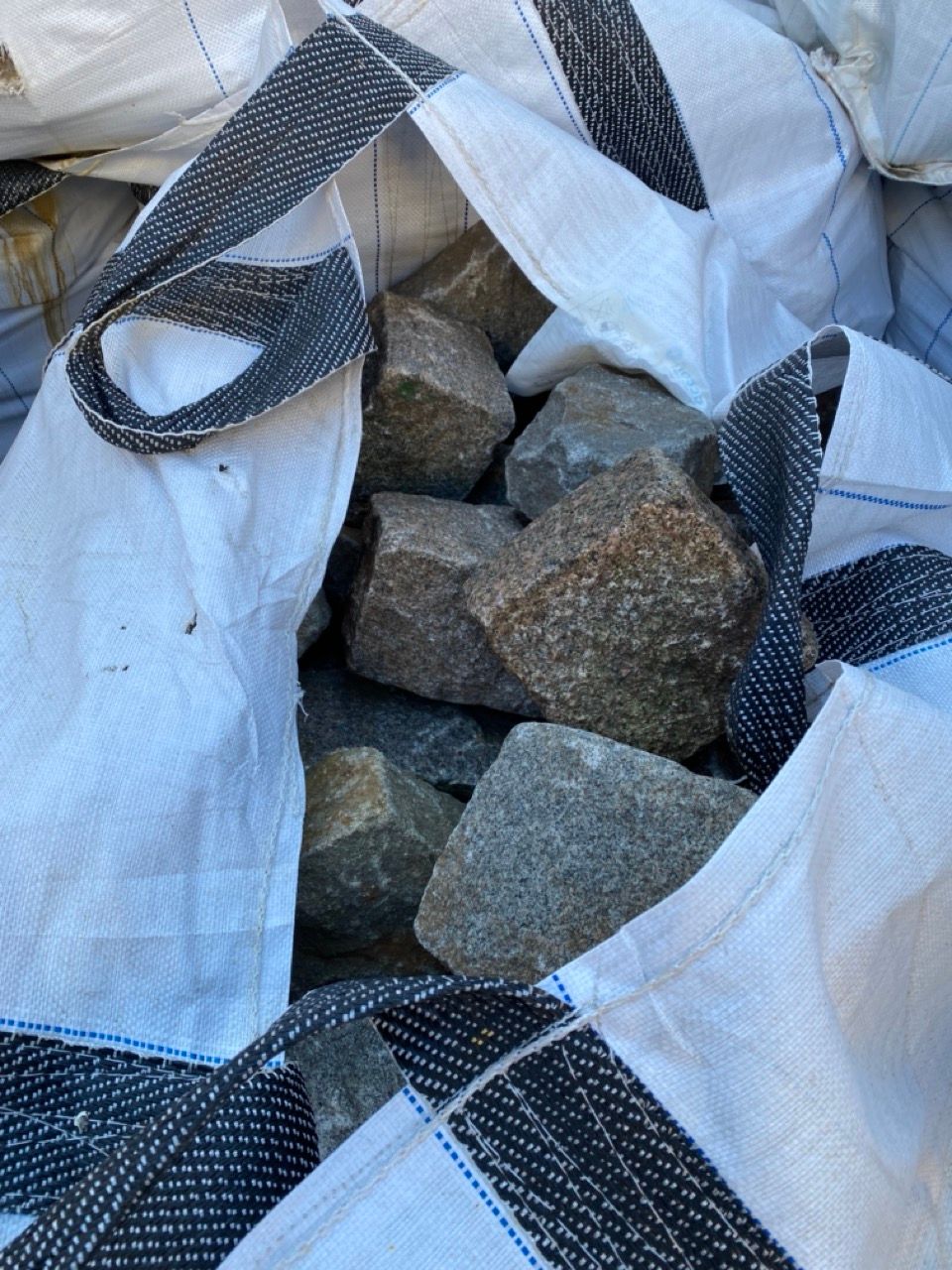
Cobblestones removed and stored in bags when Statsraad Lehmkuhl was in dry dock in the autumn of 2024. Photo: Ronald Toppe
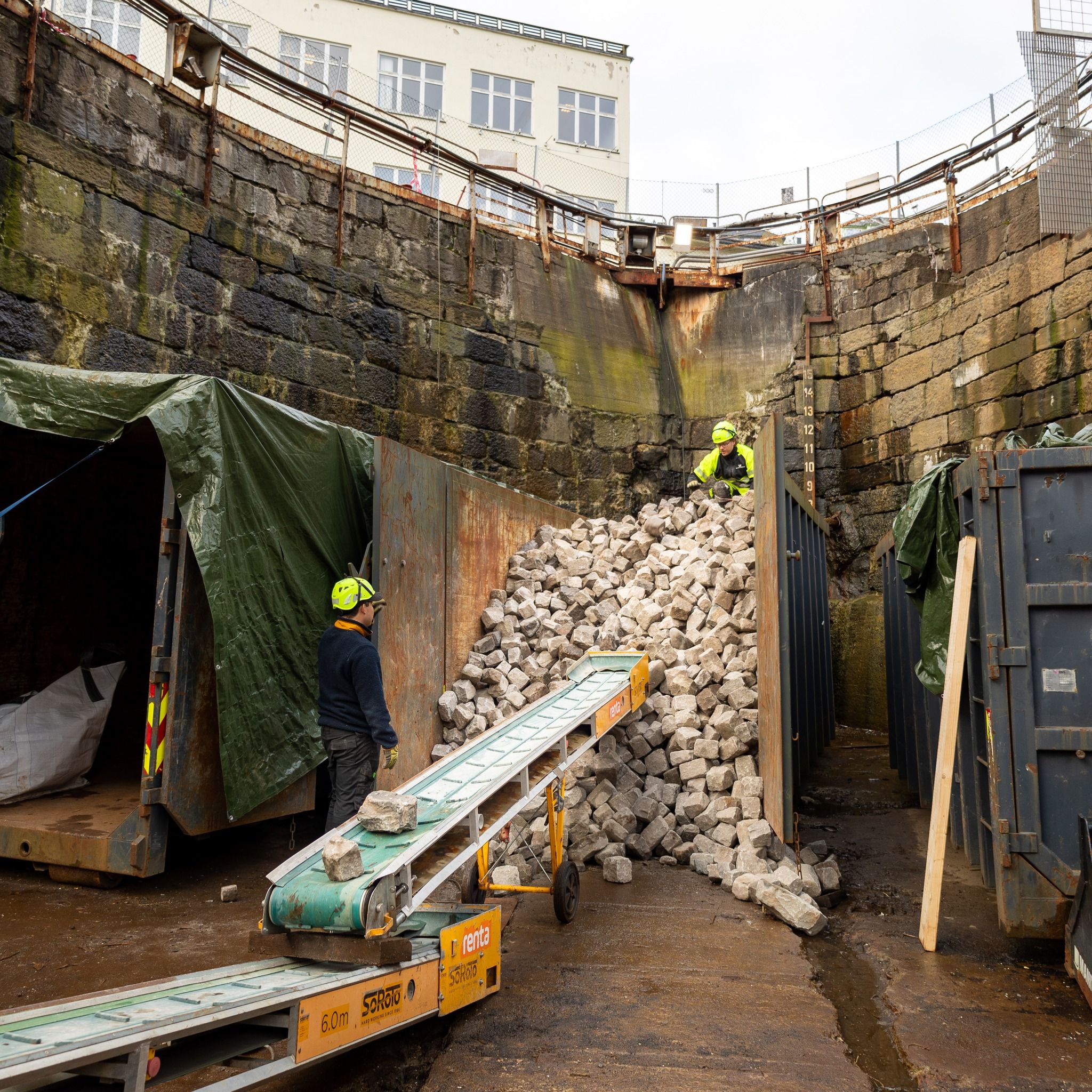
The work is done, and the cobblestones reloaded. Photo: Helene Spurkeland
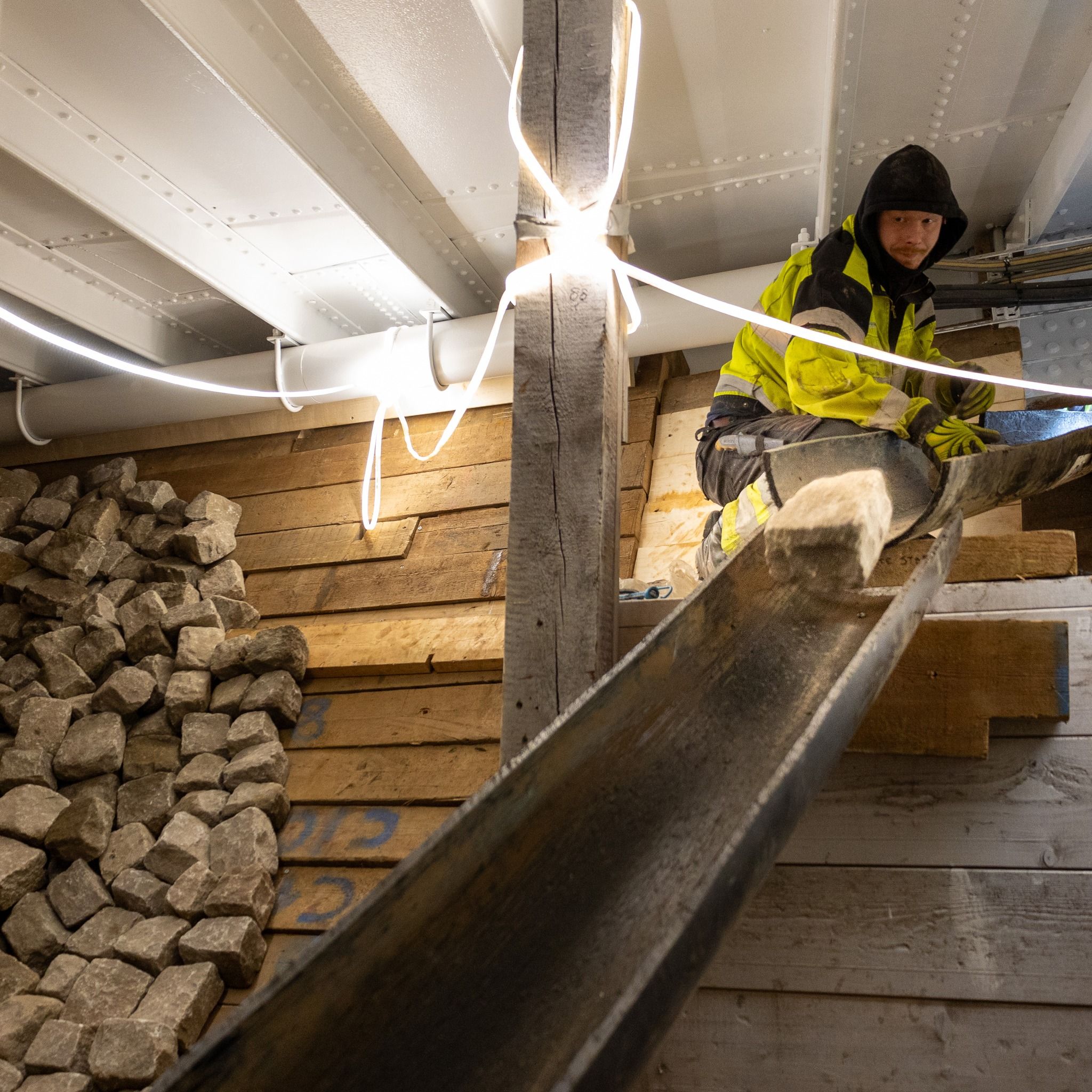
The work is done, and the cobblestones reloaded. Photo: Helene Spurkeland
According to the official maritime inquiry, one hundred tons of this stone ballast were thrown overboard, and the freshwater tanks were pumped out. This lightened the vessel enough for a tug to refloat her at high tide. She was then towed to Fredrikstad and placed in dry dock at Fredrikstad Mechanical Workshop.
The incident was reported in the newspaper Fredrikstad Blad, which noted that only two weeks later the ship had been repaired and was on her way to Horten under full sail.

No blame on the bridge
The grounding could have been a serious blemish on Captain Gabriel Kielland’s record, but the maritime inquiry concluded that neither he nor his crew were to blame.
The newspaper Bergens Aftenblad quoted the inquiry:
– The chart used for navigation shows the pole marked on the west side of Vidgrunnen, and it is clear that the pole in reality stands on the southeast side.
Chief Engineer Siri Reimers at the Norwegian Mapping Authority helped us examined the archives and confirmed that this was correct. The chart was corrected by hand on 24 July, immediately after the accident, and in the next edition the navigation pole was marked in its proper position.
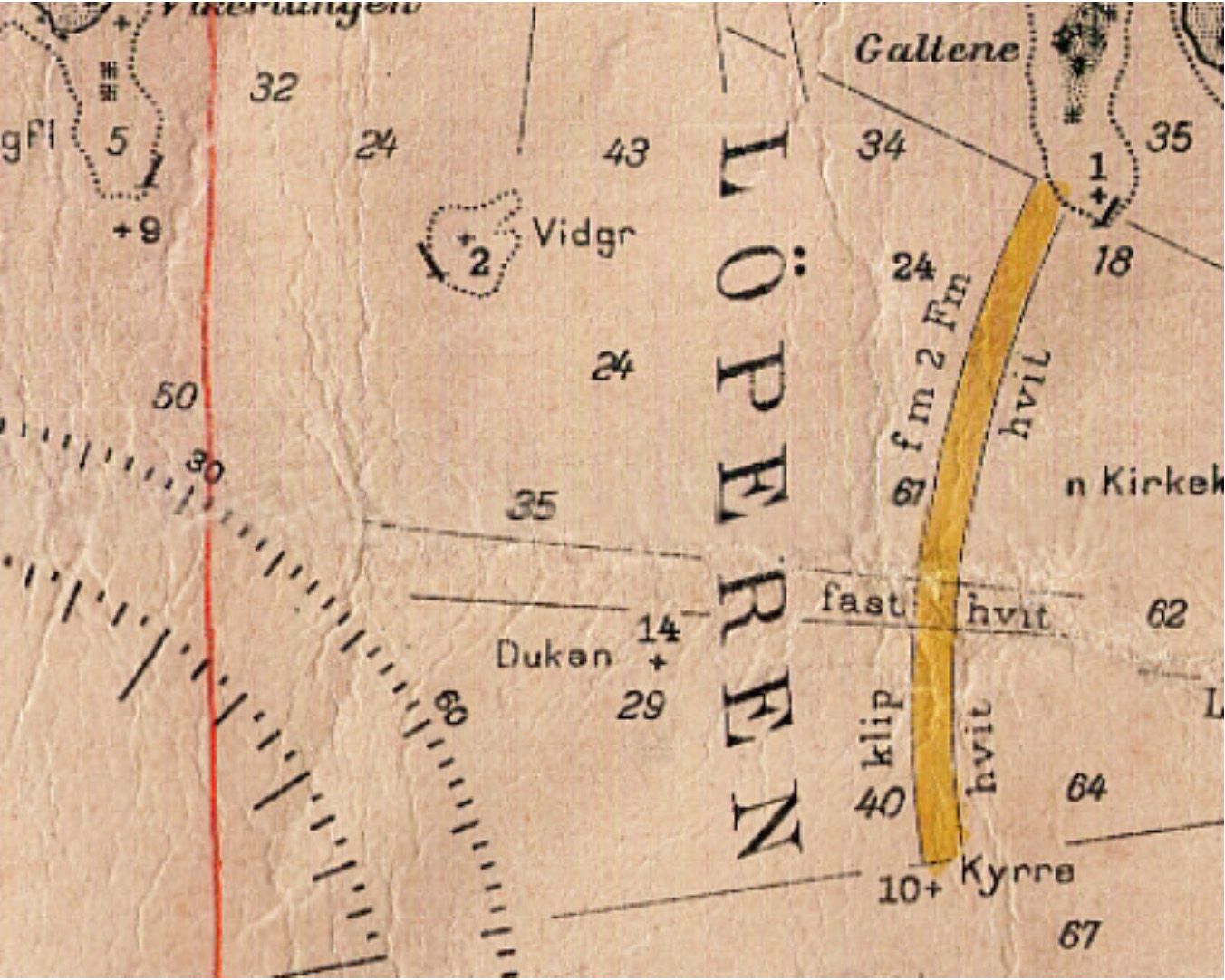
Sea chart 001 1900-1924, the pole in the wrong position.
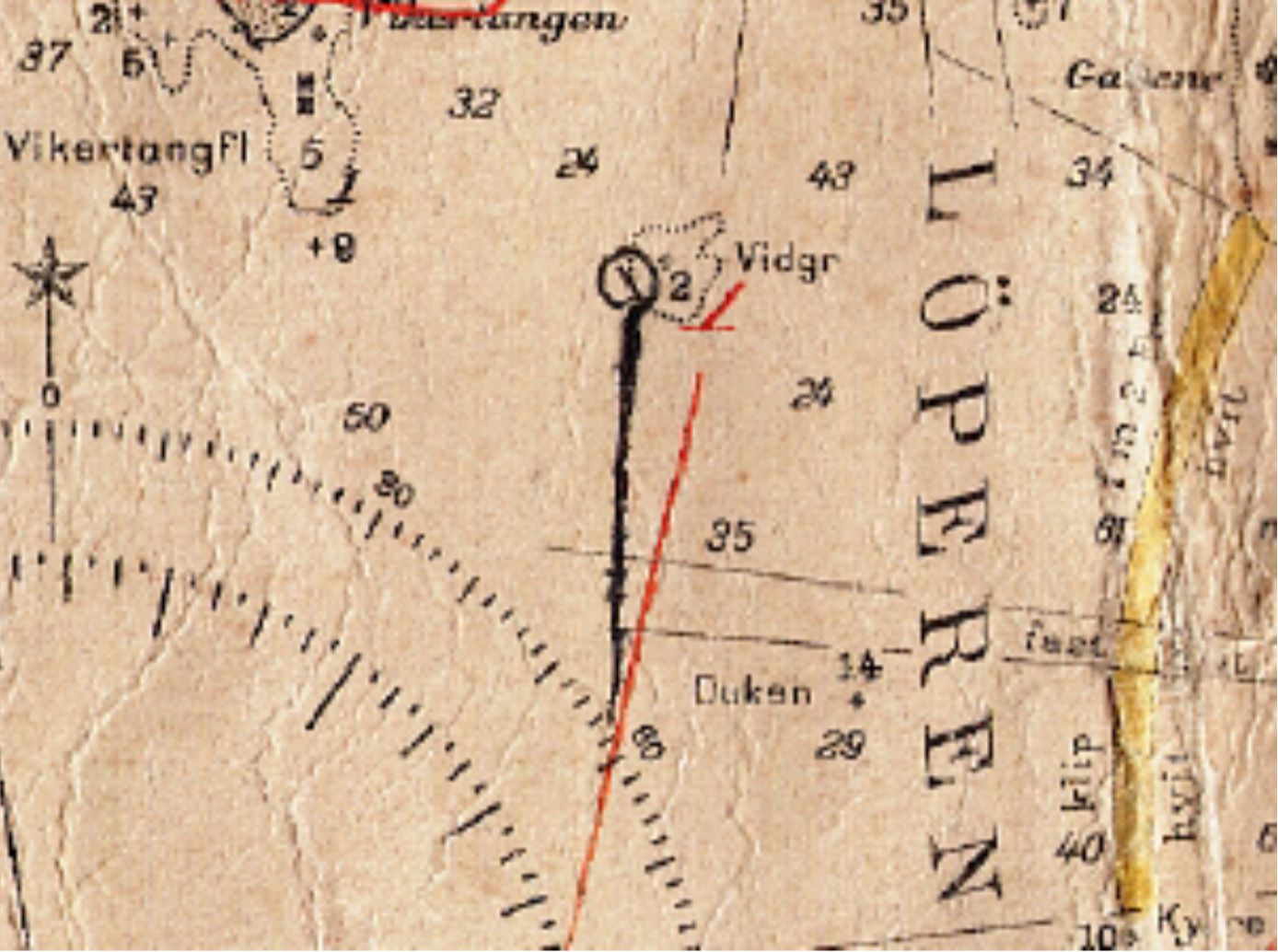
Sea chart 001 1924-1926, the position of the pole manually corrected.
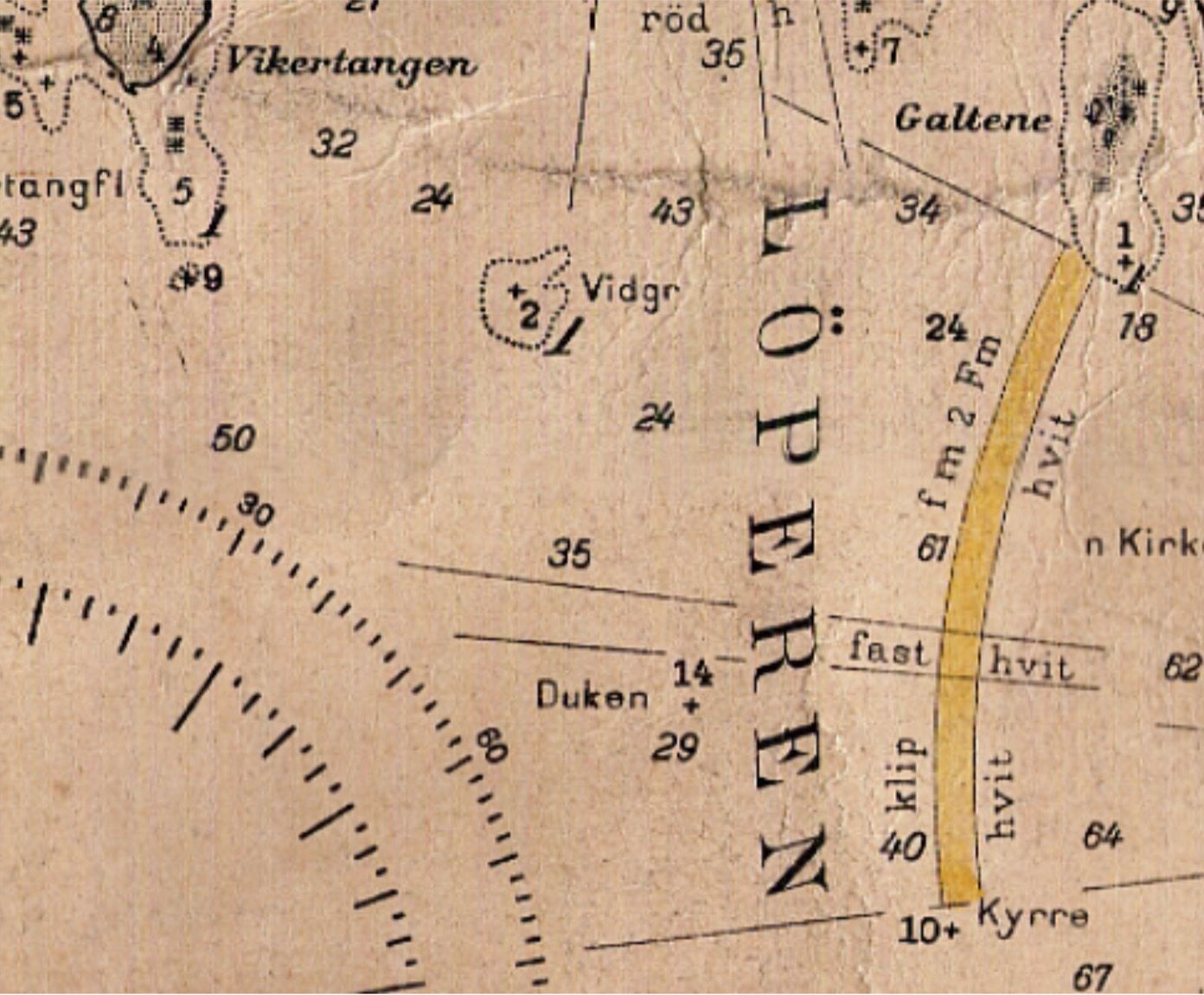
Sea chart 001 1926-1928, reprinted with the pole in the correct position.
And the ballast?
The inquiry makes no mention of the cobblestones removed from Statsraad Lehmkuhl being loaded onto another vessel. They were therefore most likely dumped straight into the sea.
Fredrikstad Stenhuggeri was a major supplier of cobblestones in the 1920s, so the ballast on board Statsraad Lehmkuhl later became a mixture of original German Kopfstein and granite from Fredrikstad.
Between 1921 and 1924 new cobblestones were laid at Bryggen in Bergen, supplied from Fredrikstad - a small detail that, a century ago, tied Statsraad Lehmkuhl even more closely to the city.
One reassuring observation - if you sail the same course toward Fredrikstad as Statsraad Lehmkuhl did, you will see that Vidgrunnen is now marked with a light as well as a navigation pole.


