


The students at Storetveit School still have time - there are three weeks left until Statsraad Lehmkuhl glides in towards Bryggen in Bergen, greeted by cheers and a warm welcome after the One Ocean Expedition. But everything has to be ready by then.
Storetveit School lies beside a park just south of Bergen city centre. The first spring flowers are only just beginning to appear on the day we visit, but it is chilly, and the hills surrounding the city are still dusted with snow.

Students in the 8th and 10th grades are making messages in a bottle. Not letters asking to be rescued from a deserted island, but still cries for help - on behalf of the ocean. Their messages are about rising temperatures, ocean acidification, rising sea levels, microplastics and ghost nets - lost, but still catching fish.
Message in a Bottle
The messages the students are working on are part of the “Message in a Bottle” project. The project was launched by Statsraad Lehmkuhl as part of the One Ocean Expedition. Drew School in San Francisco embraced the idea and developed teaching materials and a set of assignments.

Teachers and students can participate in digital meetings with the researchers on board and gain access to data collected during the expedition. The result is that a new generation is learning about the ocean, climate and sustainability in an engaging and exciting way.
Making videos
The "bottles" made by class 10E contain videos. Their teacher, Magnhild Hauge Oppedal, first gave the students the necessary background, and then complete freedom to choose what message they wanted to share - and how they wanted to communicate it.

Agneta Bergstrøm Vågenes kneels on a chair in front of a whiteboard. The group discusses for a moment, Agneta nods and starts drawing. First the sun, then greenhouse gases as clouds. A tablet is set up to photograph the board. Lines illustrating heat from the sun are added, another photo is taken, more drawings are added, and more photos follow.
– It’s going to be a stop-motion video about rising sea levels, says Hedda Brunstad Løvold. But first we have to explain why the ocean temperature is rising.
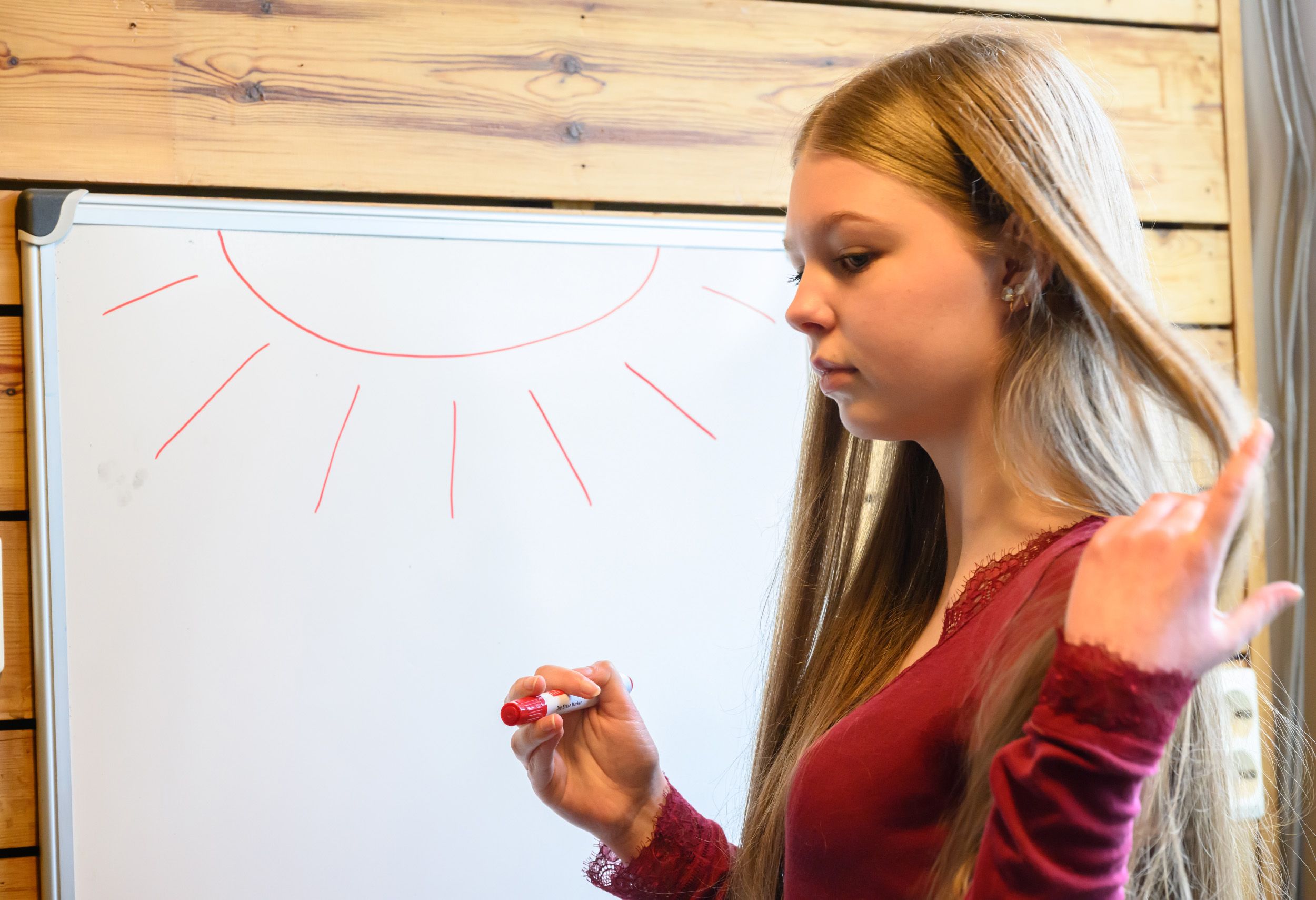
First, Agneta Bergstrøm Vågenes draws the sun. Photo: Ronald Toppe
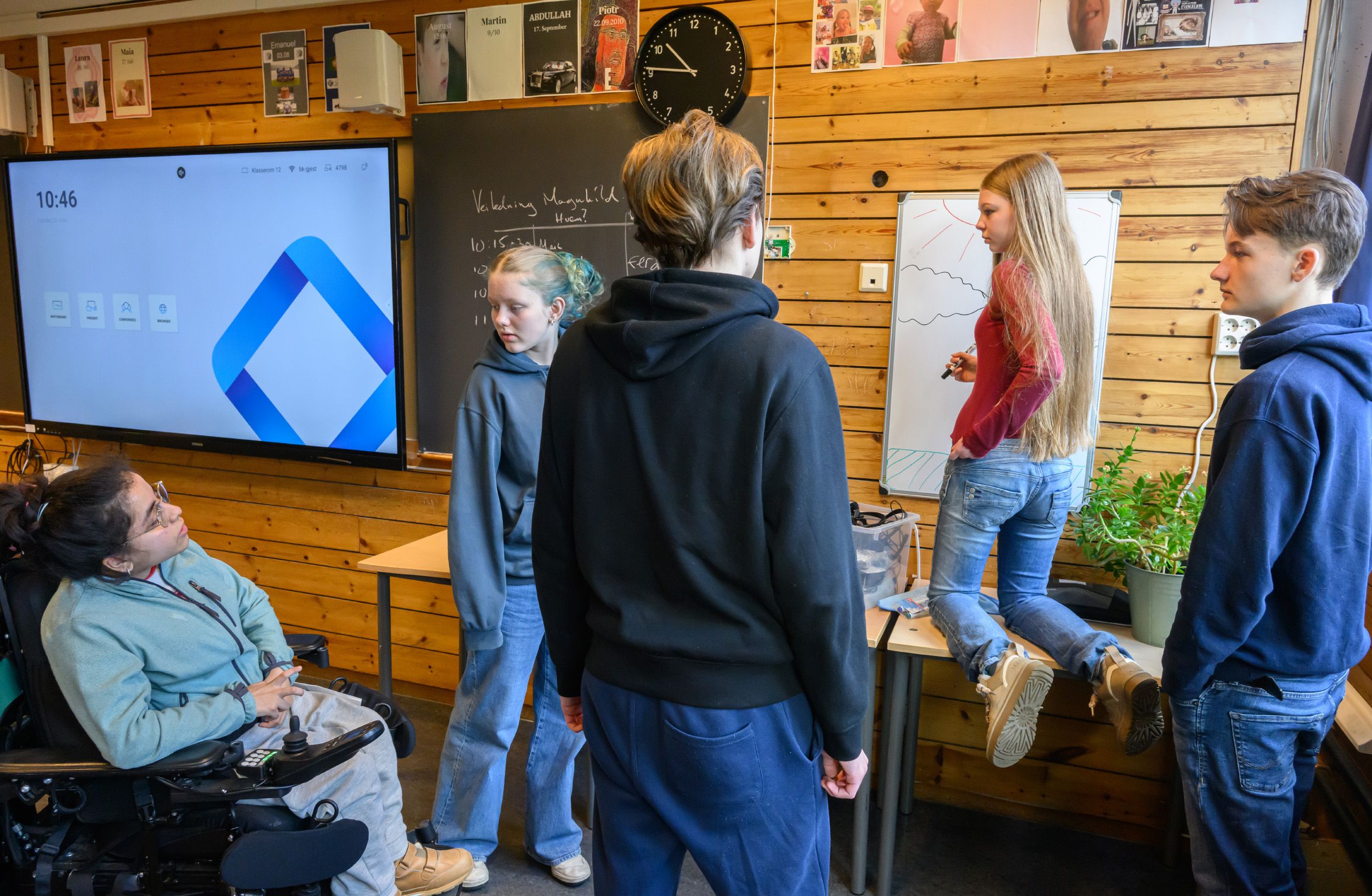
... A brief discussion ... Photo: Ronald Toppe
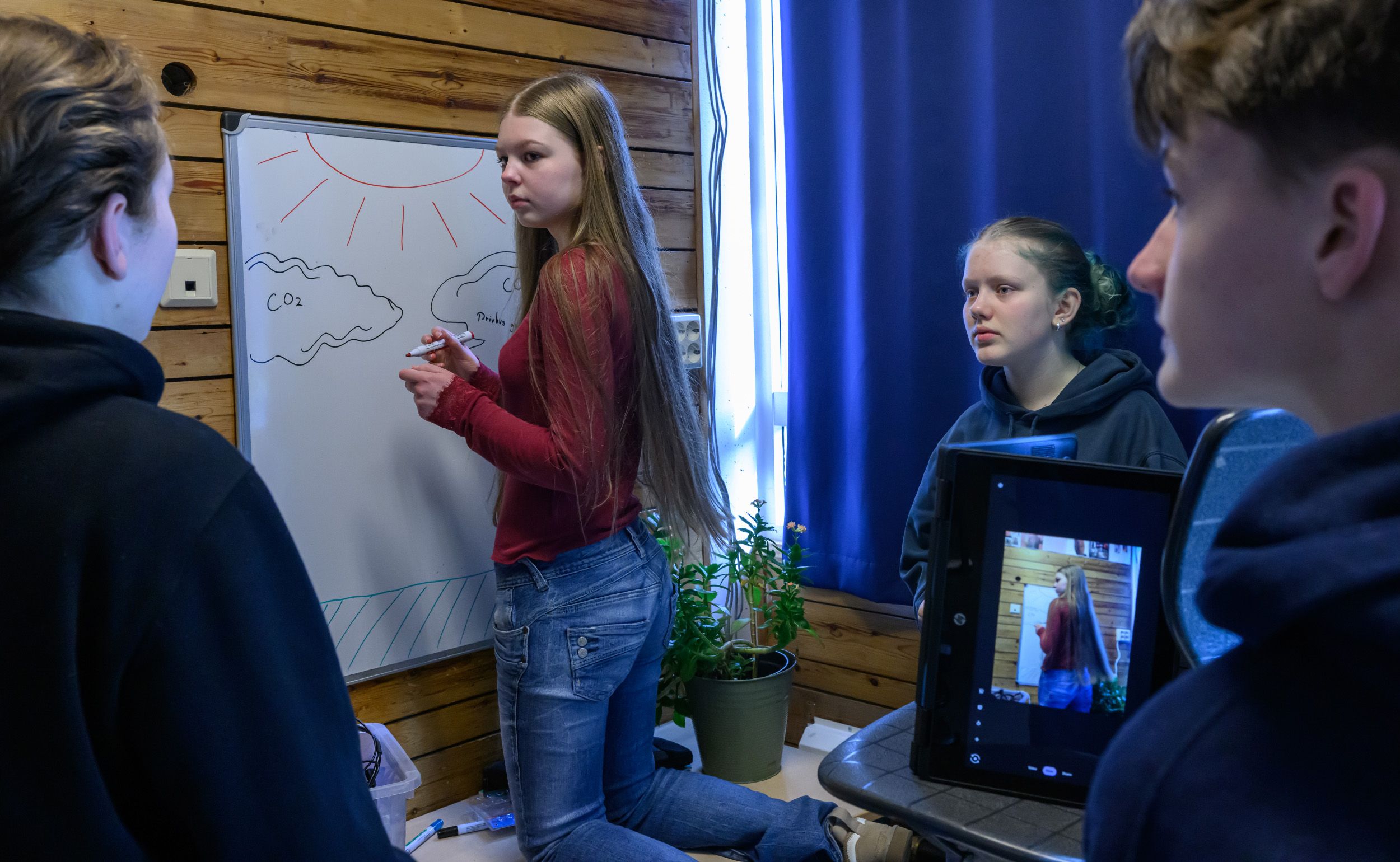
... text is added, and the drawing is ready to be photographed. Photo: Ronald Toppe
Quiet conversations
The classroom is surprisingly calm. The students talk quietly together and type on their laptops. Sonja Elise Engebretsen is the only one working with paper and pencil.
– We want to use a real message in a bottle in the video we’re making, she explains. This is the letter that will go into the bottle that we’ll film ourselves throwing into the sea.
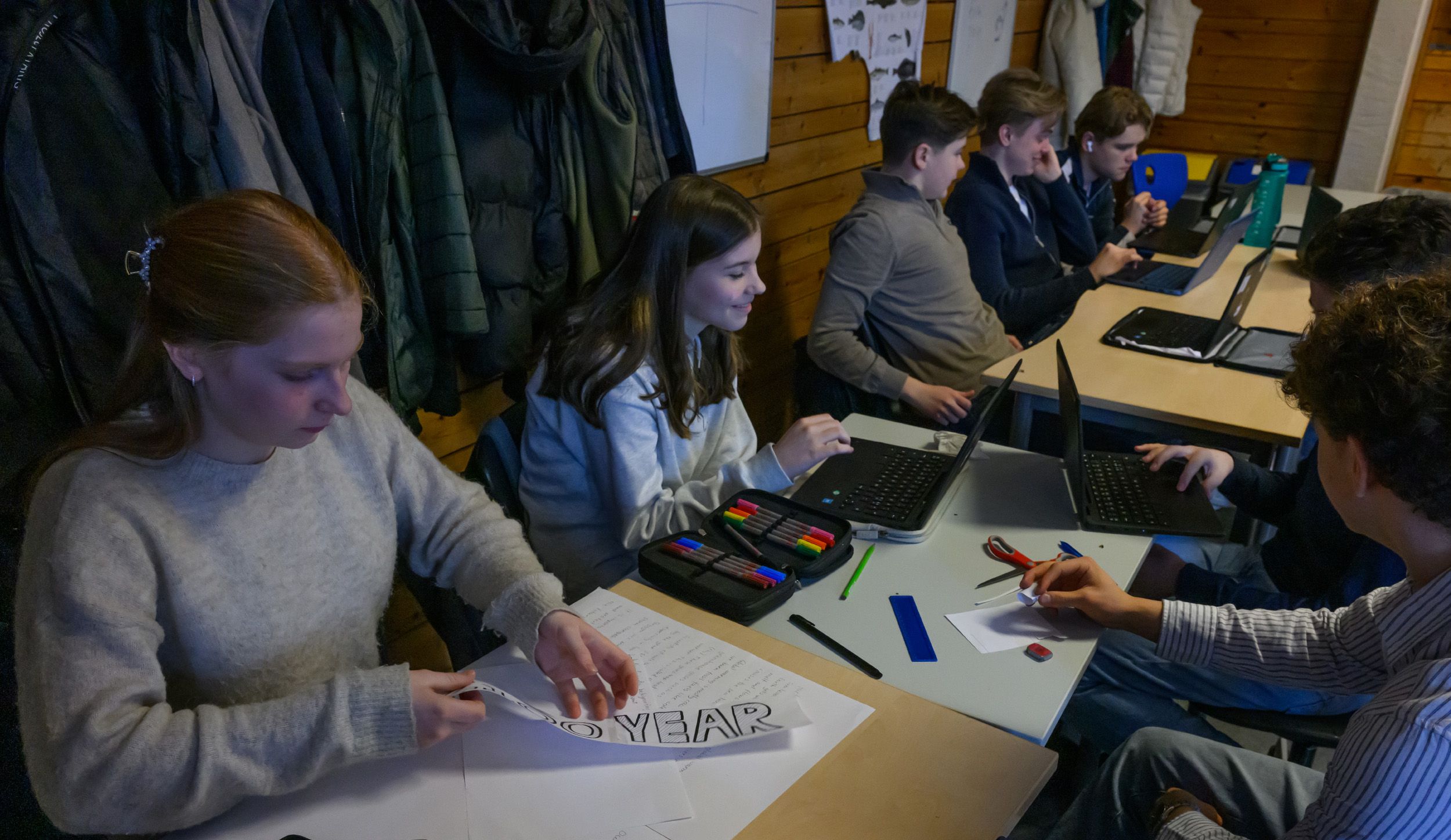
Sonja Elise Engebretsen is making a message written on paper. Photo: Ronald Toppe
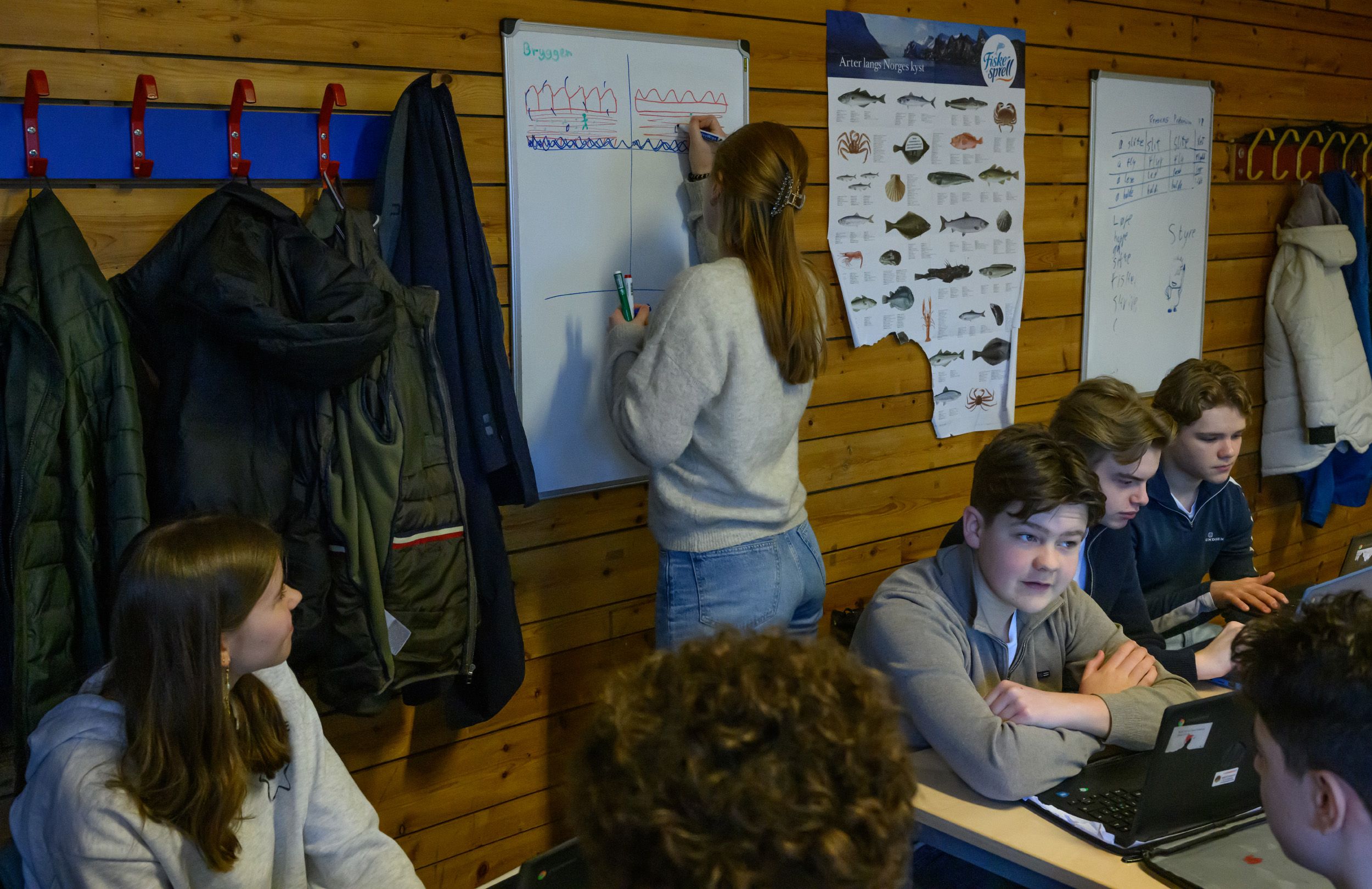
Sonja Elise Engebretsen editing the storyboard. Photo: Ronald Toppe
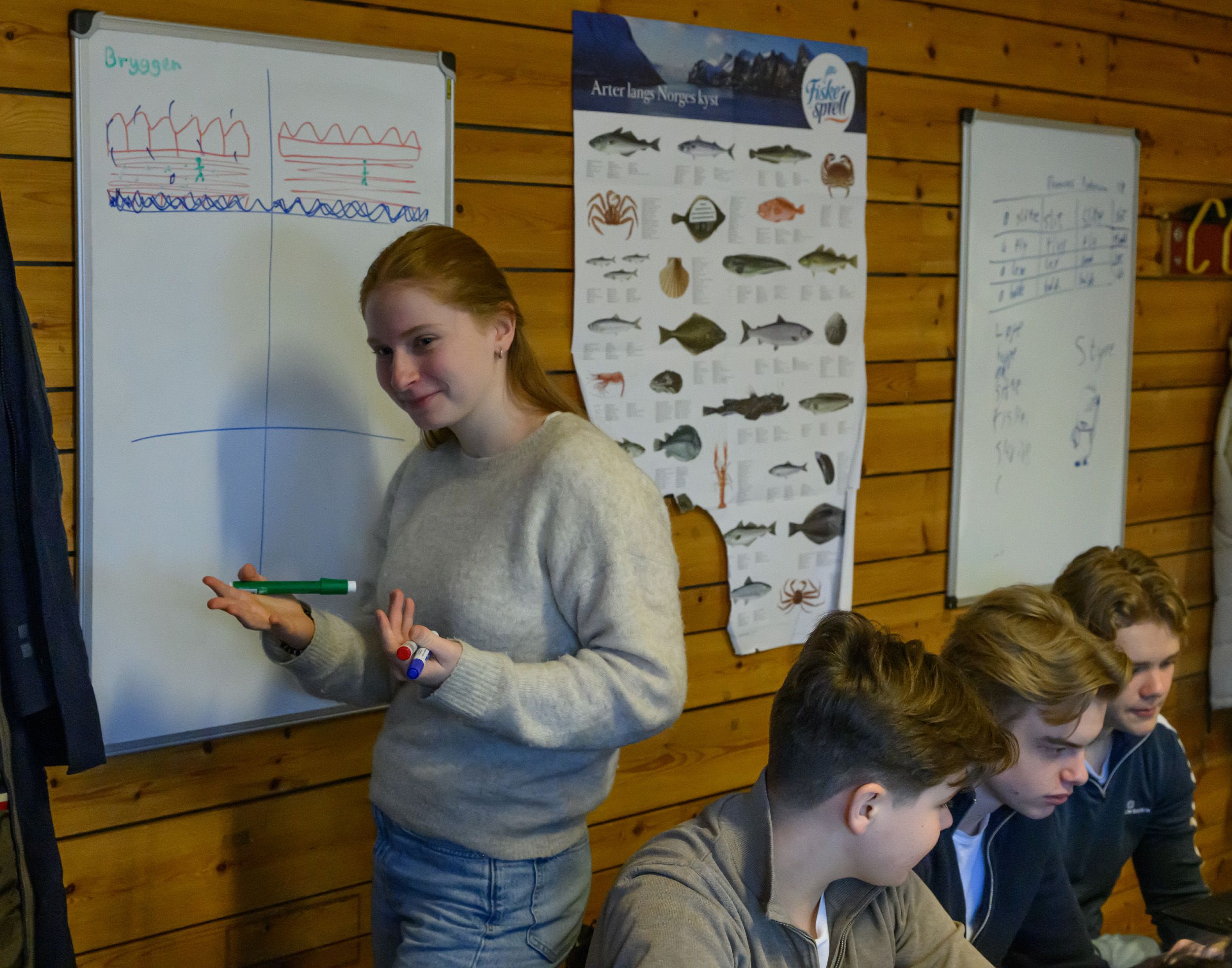
Sonja Elise Engebretsen editing the storyboard. Photo: Ronald Toppe
Before sitting down to write the letter, she worked on the storyboard for the video - small boxes with sketches showing how the group imagines the story unfolding.
Confront politicians
One group has taken on a tough task, they want to confront politicians.
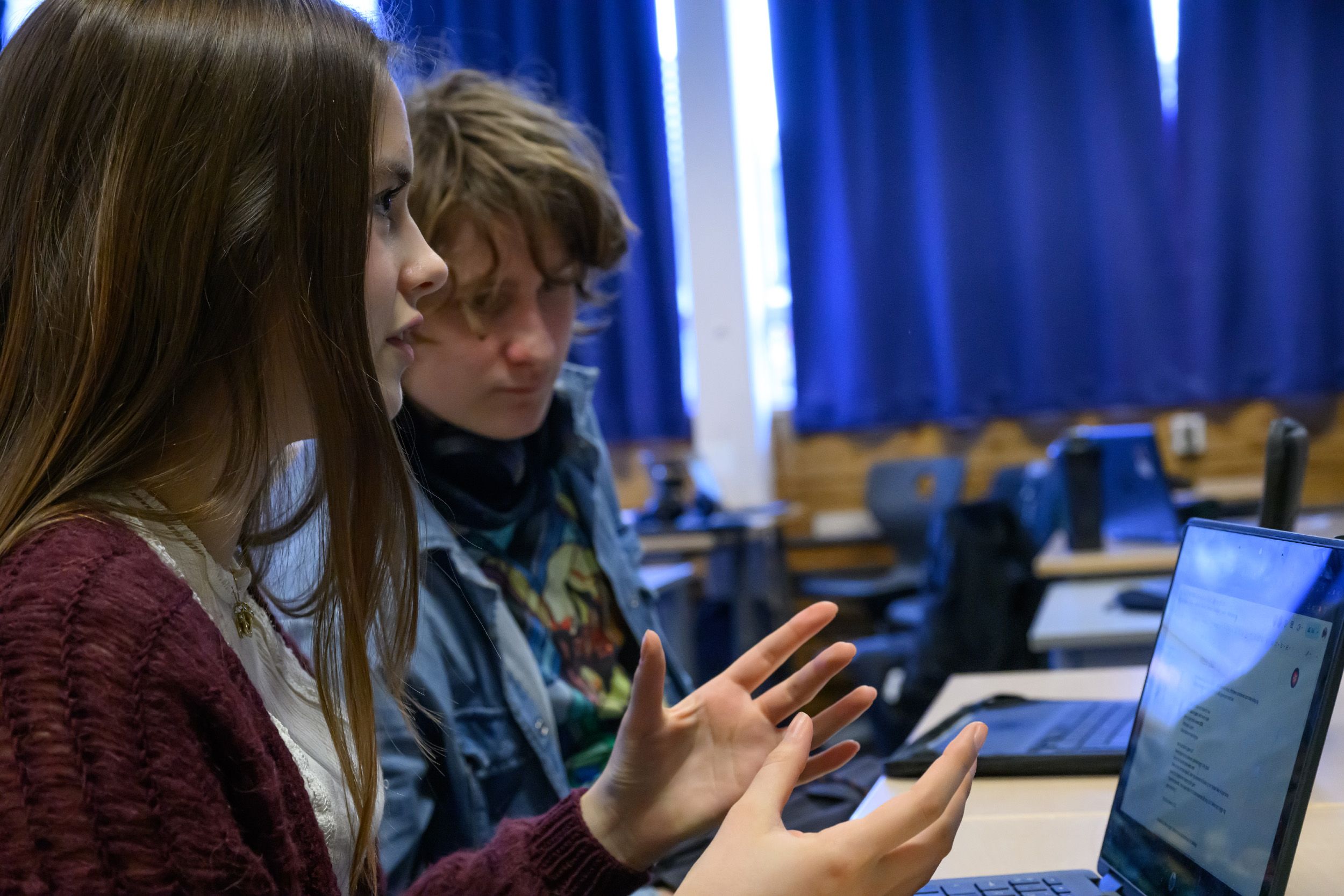
Isabel Bendiksen Holtung is frustrated - politicians don't do anything. Photo: Ronald Toppe
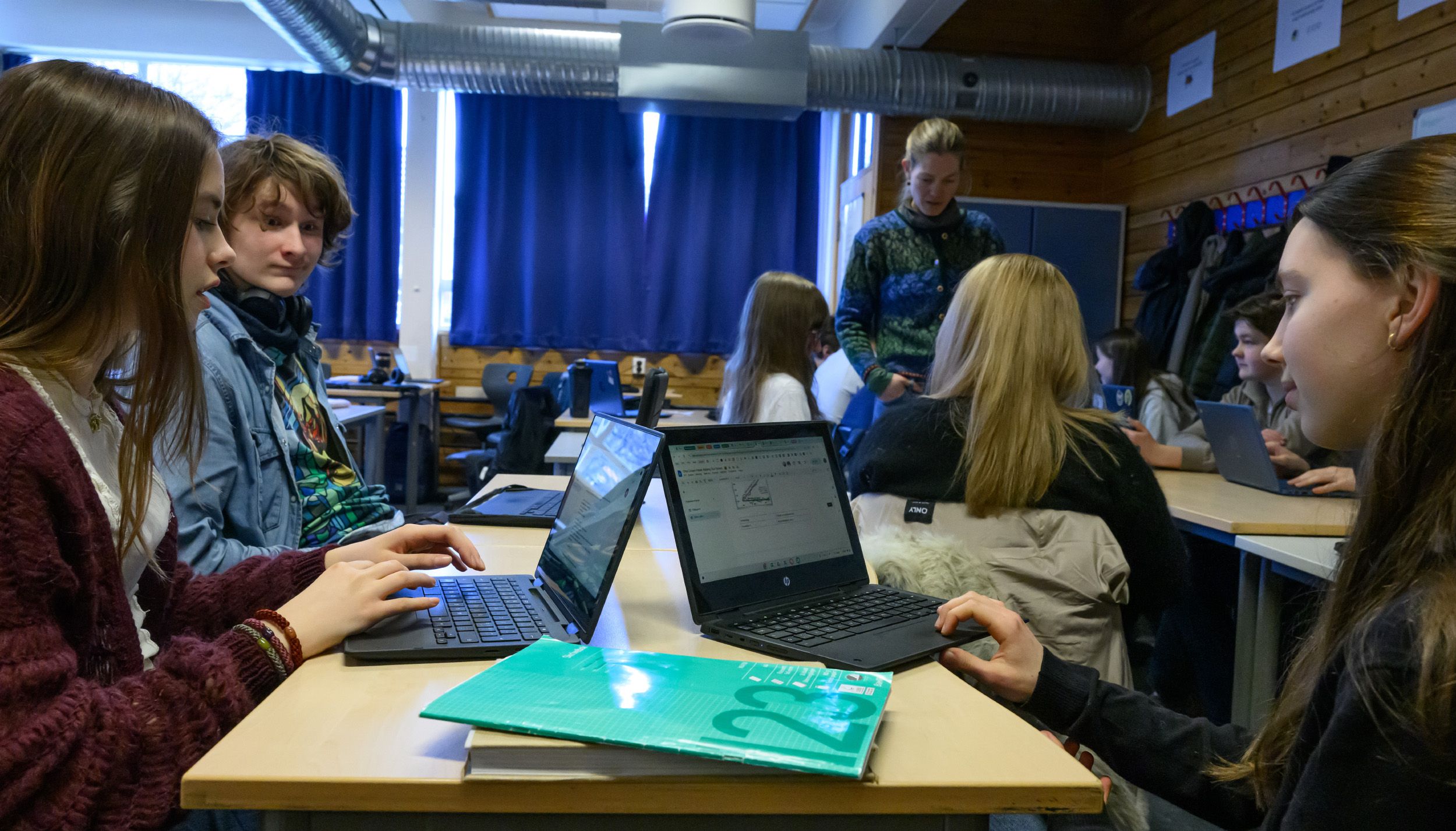
The group has taken on a tough task. Photo: Ronald Toppe
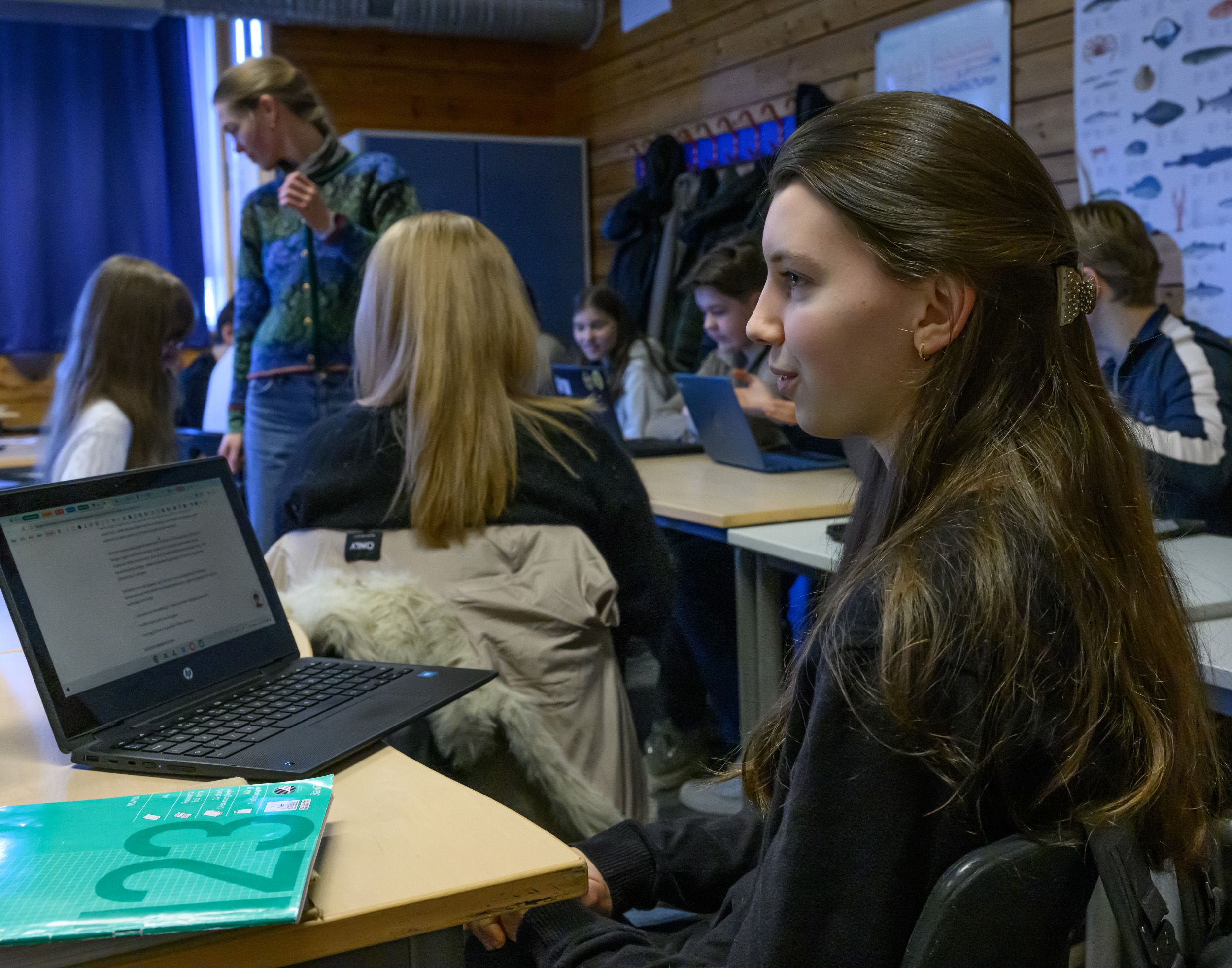
Go down to the City hall an ask for an interview? Photo: Ronald Toppe
– Politicians talk a lot, but they don’t actually do anything, says Isabel Bendiksen Holtung, frustrated. Her challenge is how to reach them. Could they just go down to City Hall with a camera and ask for an interview?
The students are creative. One group wants a fish to be the narrator in their video, a real, live fish.
– Where can we easily film a fish swimming around? Andrea Lone Hansen wonders. Maybe at the Aquarium at Nordnes? The others nod enthusiastically.

Building display cases
We walk further down the corridor to class 8C. Here the noise level is higher - in teacher Paal Bergh’s classroom there is sawing, painting and modelling going on.
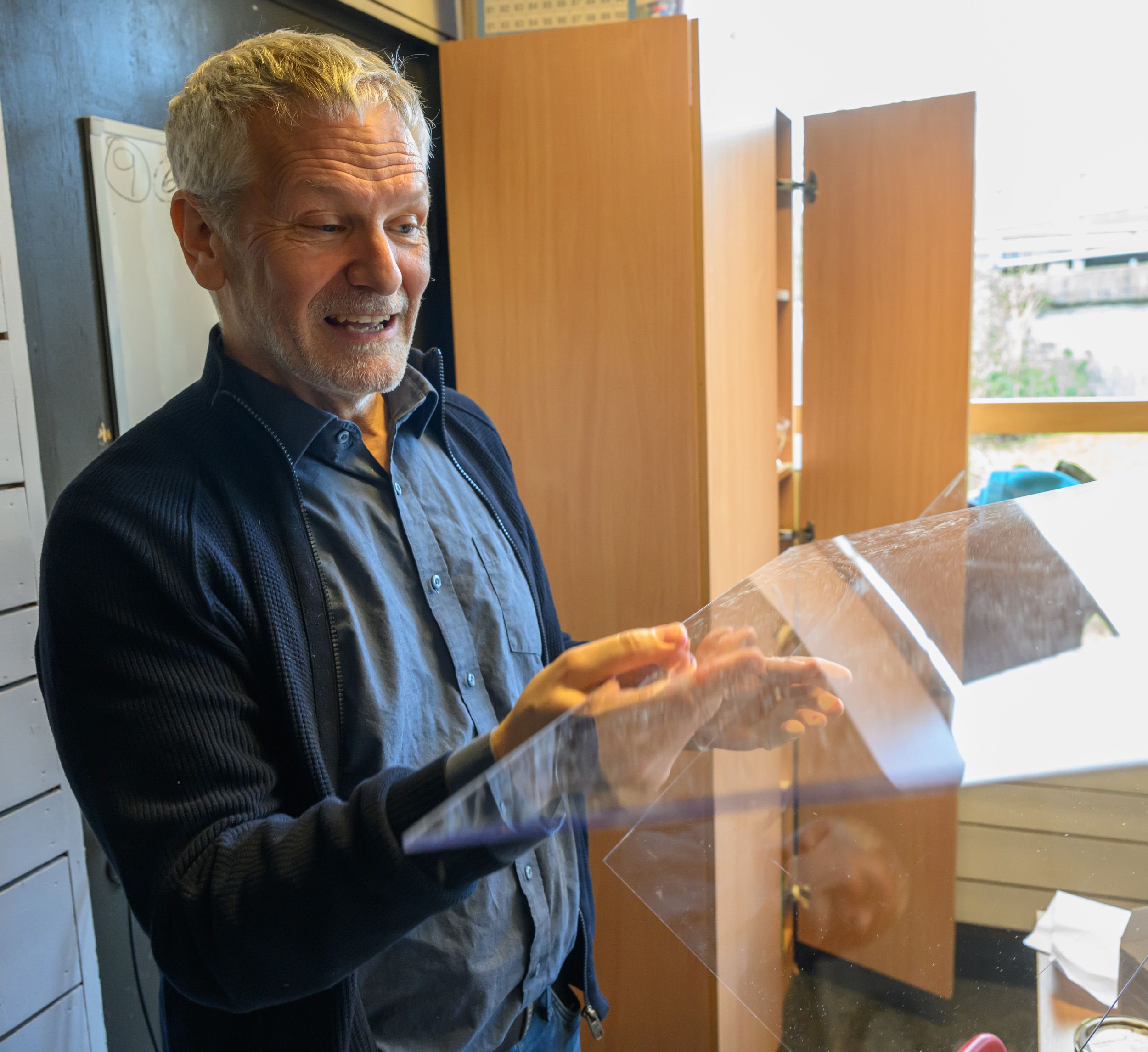
Teacher Paal Bergh has built display cases from wood and plexiglass. Photo: Ronald Toppe
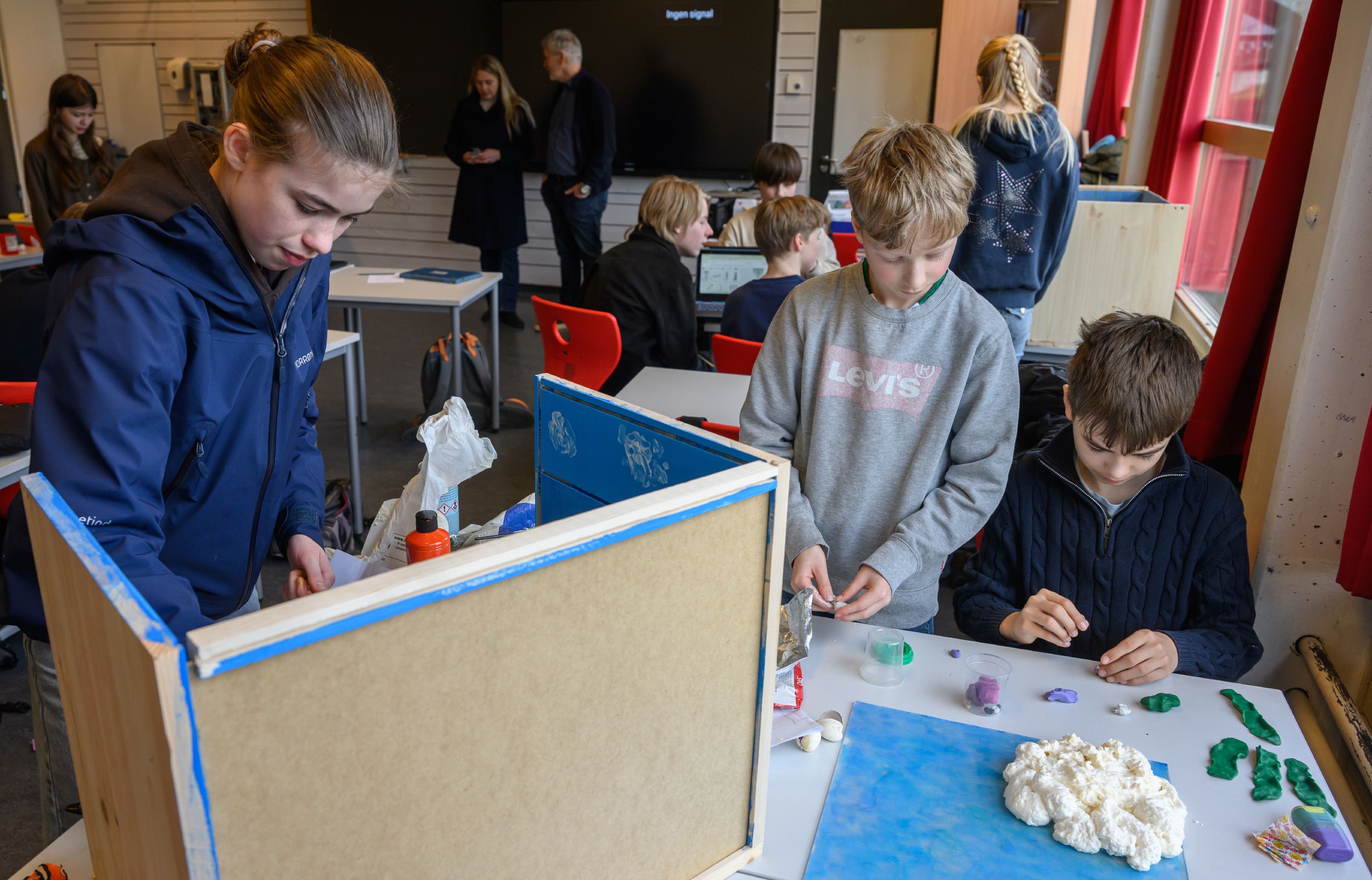
A nice way to learn. Photo: Ronald Toppe
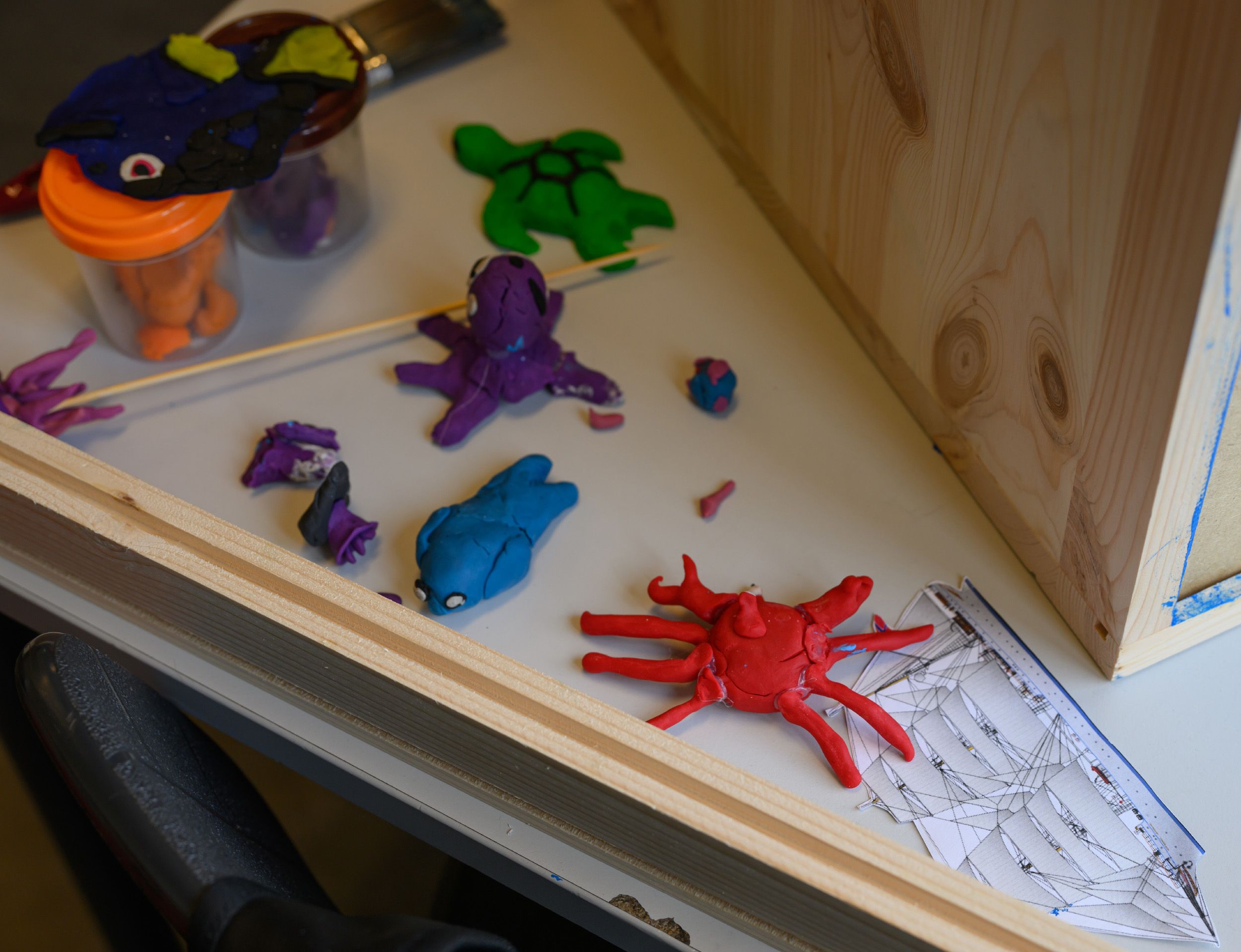
Ready for the display case. Photo: Ronald Toppe
Paal has built display cases from wood and plexiglass, and the students are filling them with stories. Expanding foam becomes the seabed, populated with fish, crabs, corals and other organisms. One display case will tell the story of pollution, warming seas and coral death. Another will show nets and traps that are lost and remain in the ocean, where they continue to catch fish and shellfish, before eventually turning into microplastics after many years.
Luna My Bergsvik has 3D-printed a boat and painted the hull bright red. Now she is sawing a thin strip into short pieces.
– It’s going to be a ghost trap, she says. A lost trap, lying there killing crabs and lobsters.
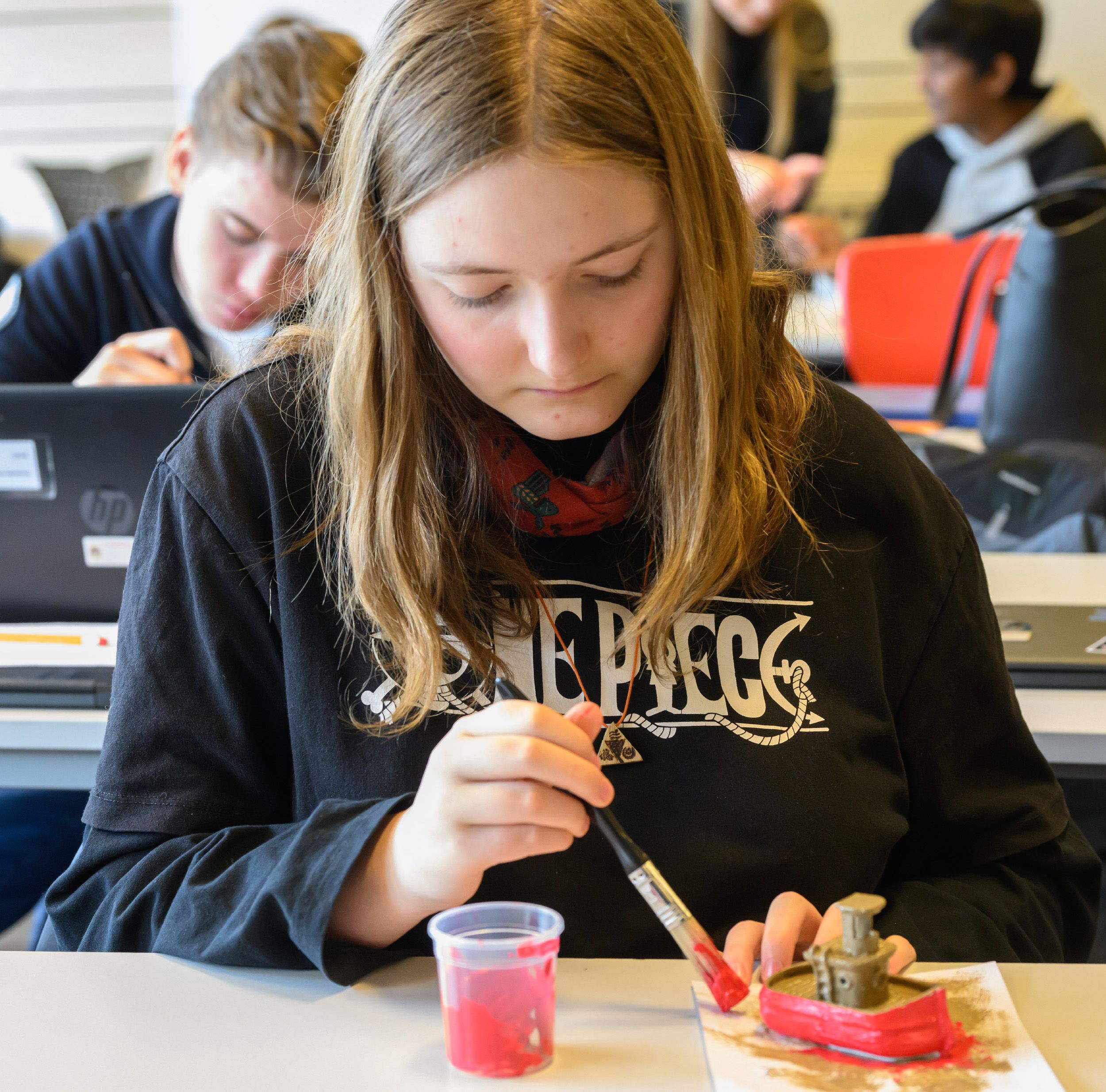
Luna My Bergsvik is painting her boat red. Photo: Ronald Toppe
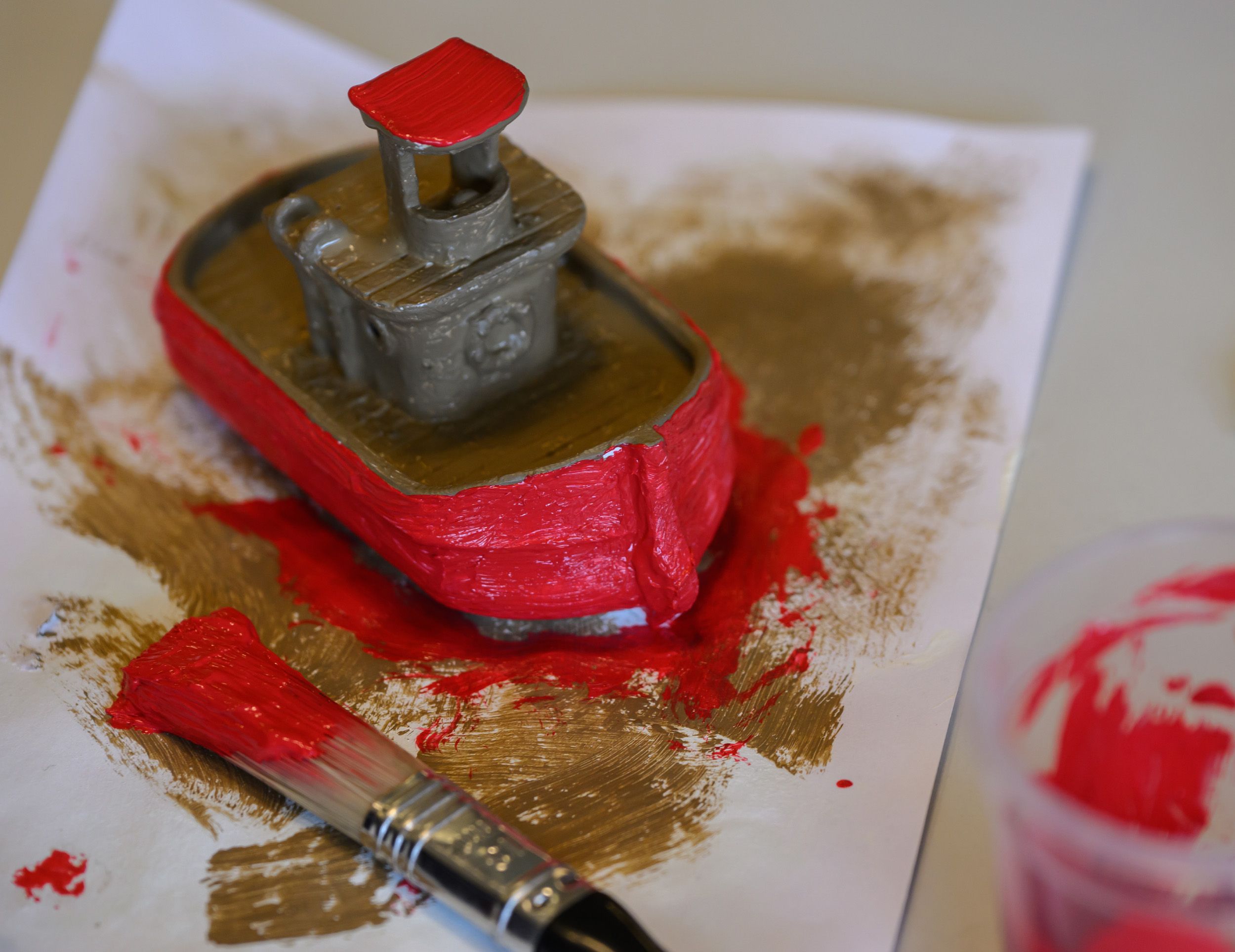
The boat is 3D printed. Photo: Ronald Toppe
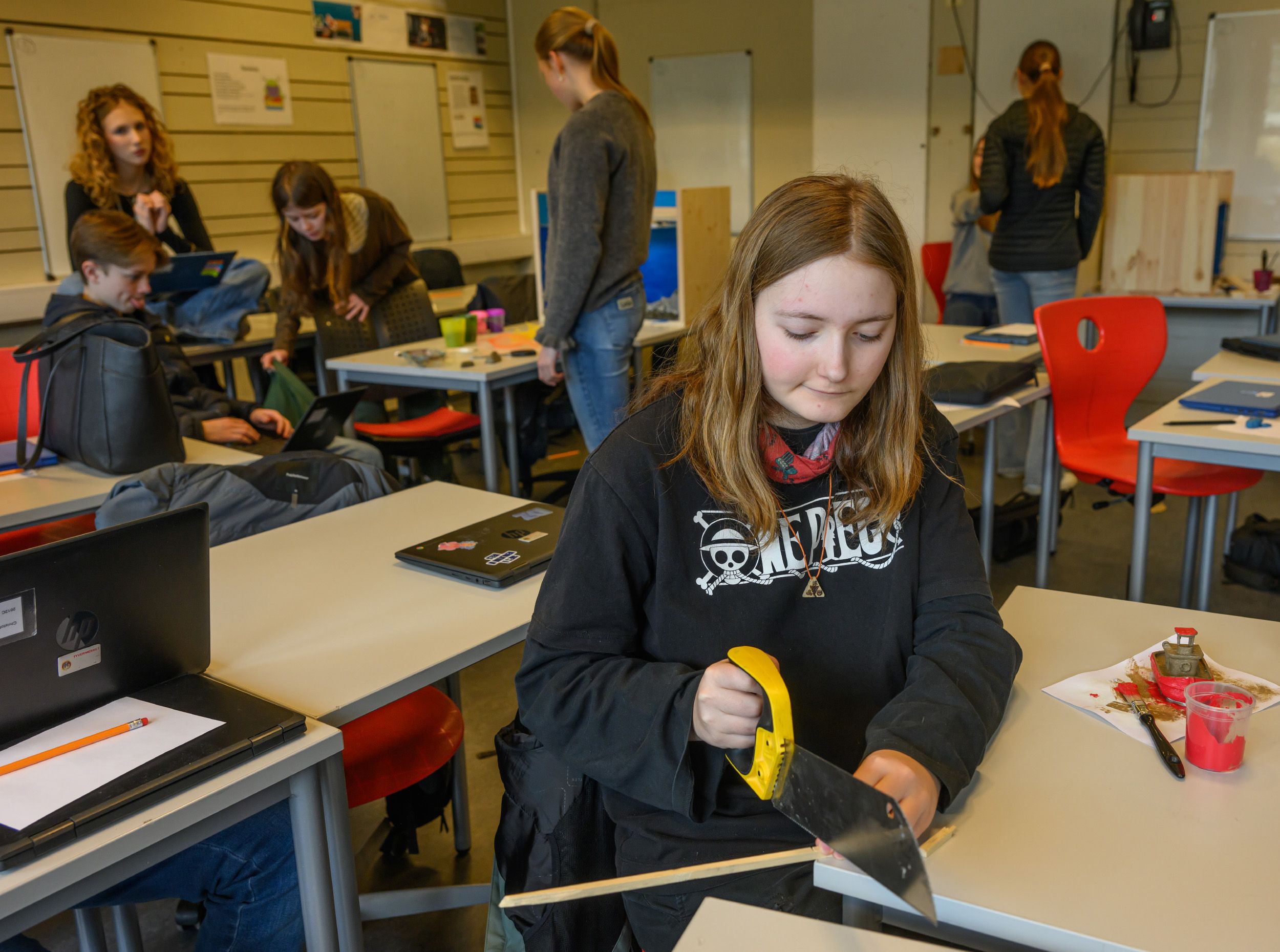
Making a lobster trap is next. Photo: Ronald Toppe
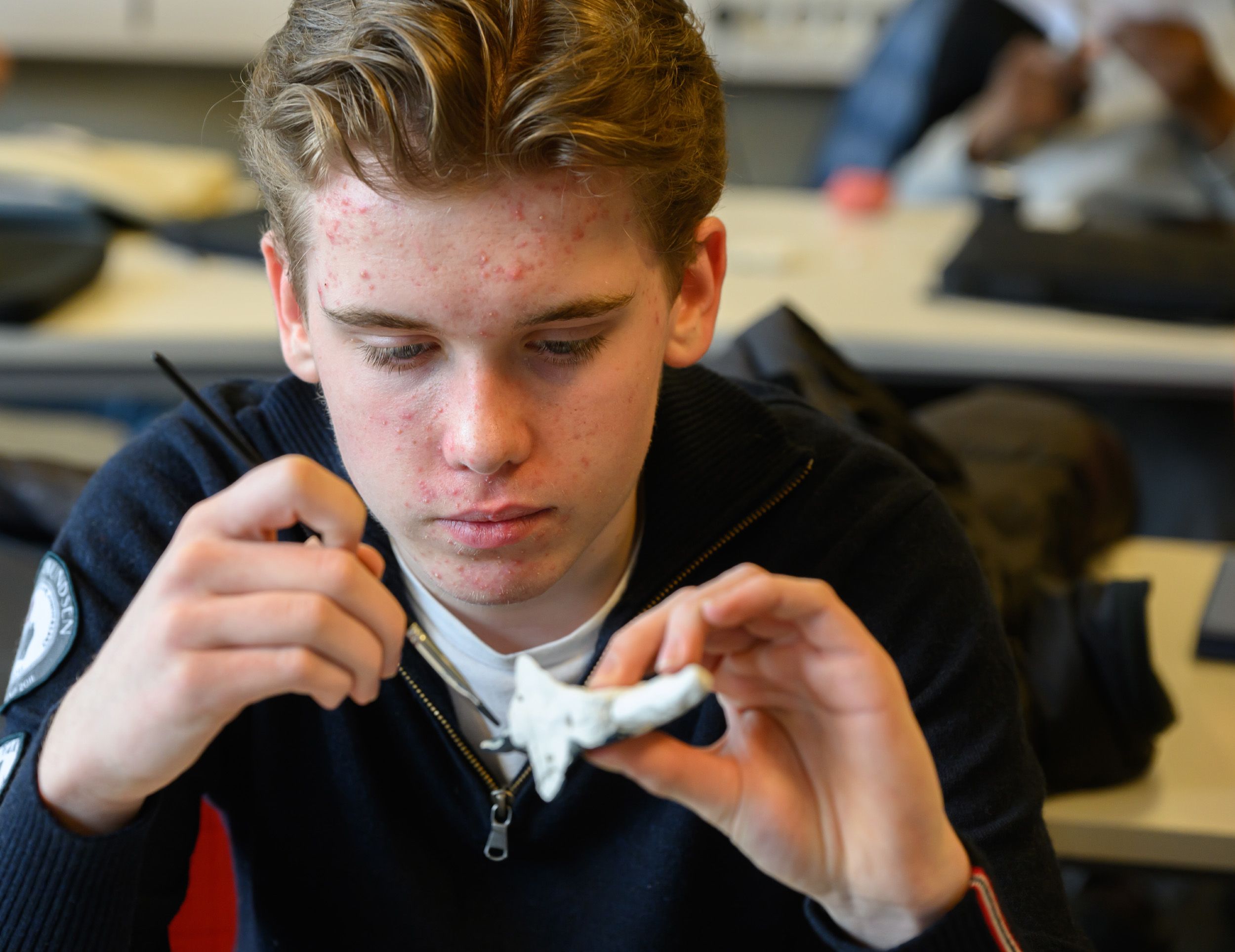
Making a lobster trap is next. Photo: Ronald Toppe
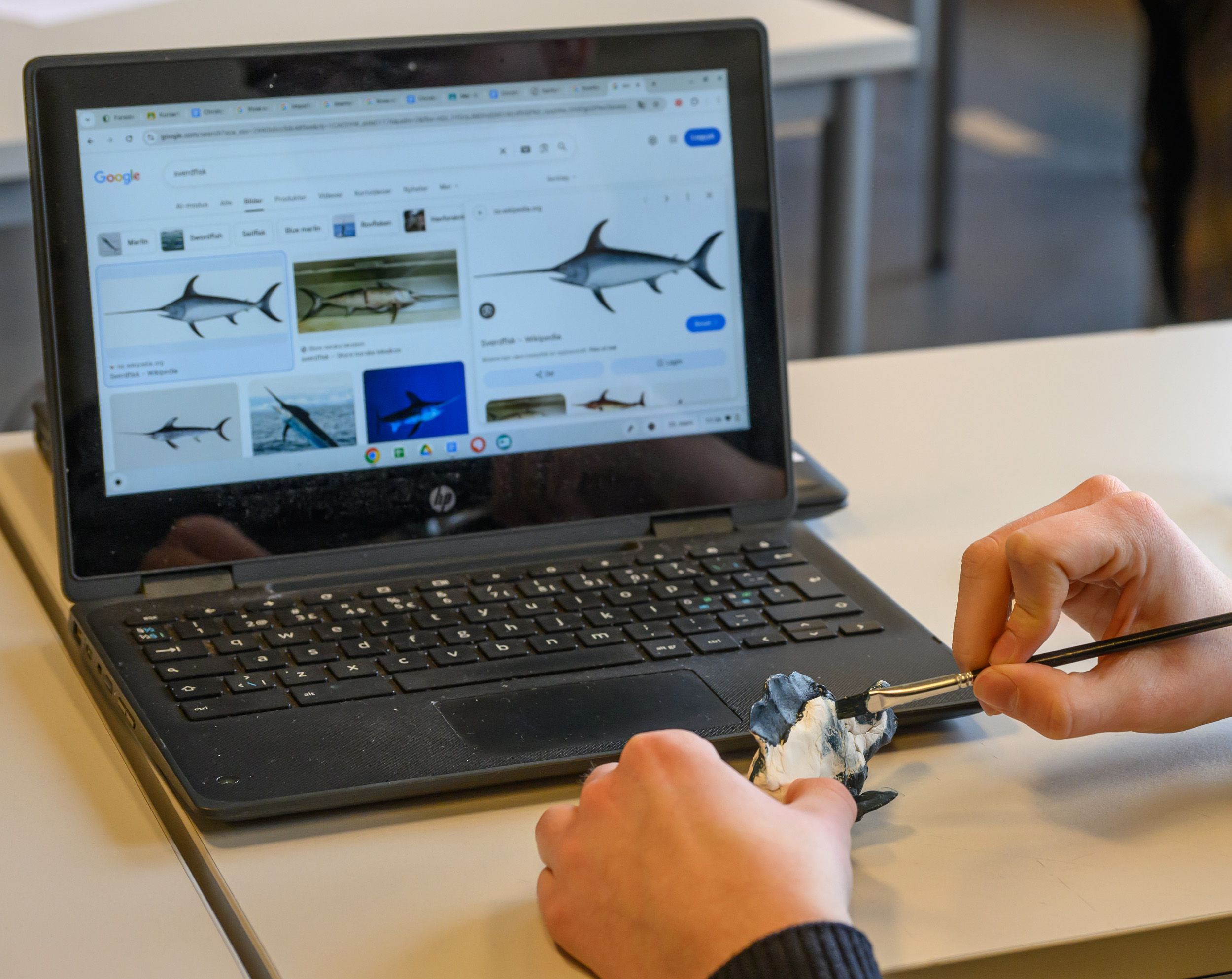
The colours have to be correct. Photo: Ronald Toppe
Christoffer Hove has made a swordfish from modelling clay and is painting it. In front of him lies a fish book opened to the right page, the colours have to be correct. Josephine Emilie Valkner is wrapping string around a round shape. She turns it slightly to glue the string in place, and then we see it - a whale.
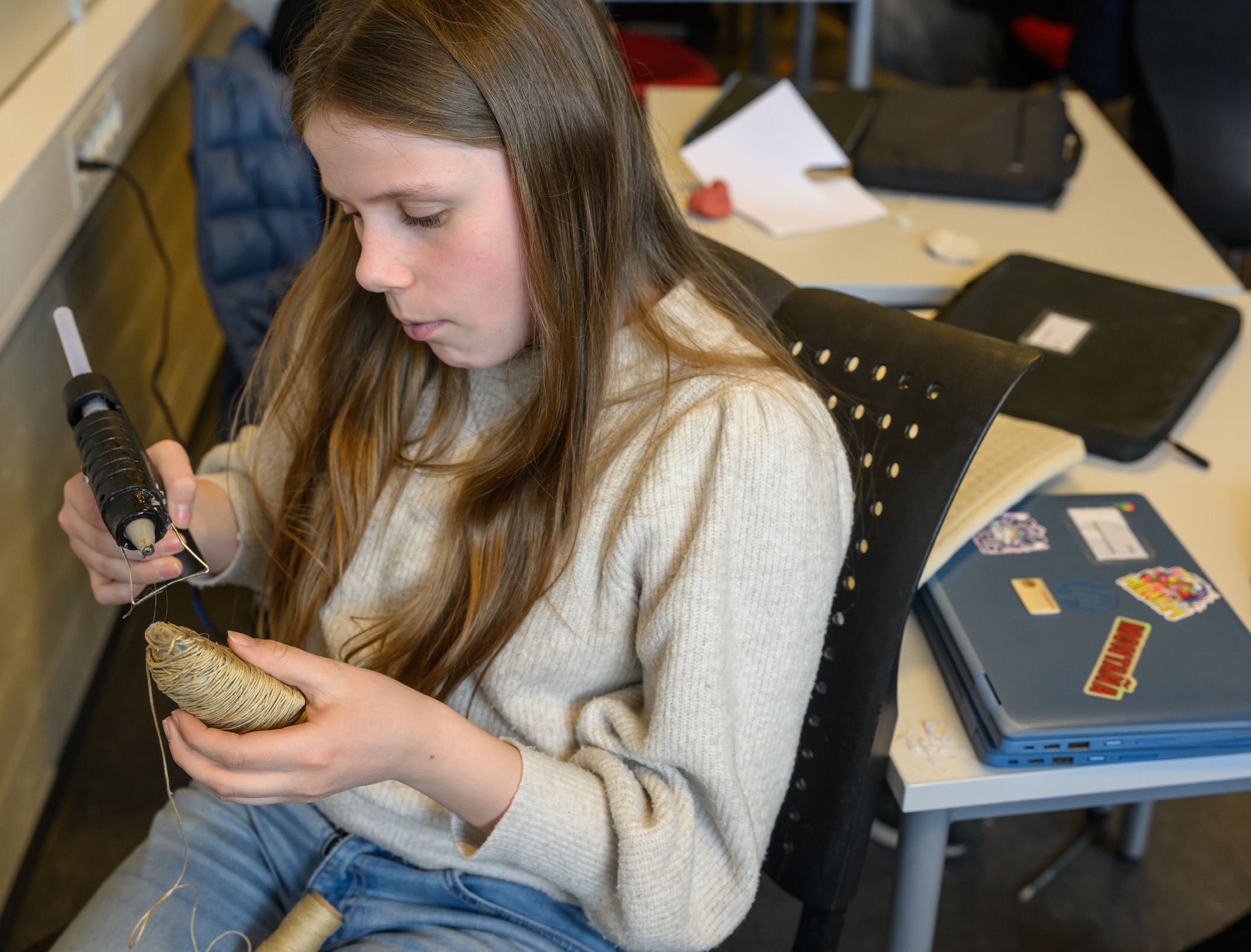
Josephine Emilie Valkner is making a whale. Photo: Ronald Toppe
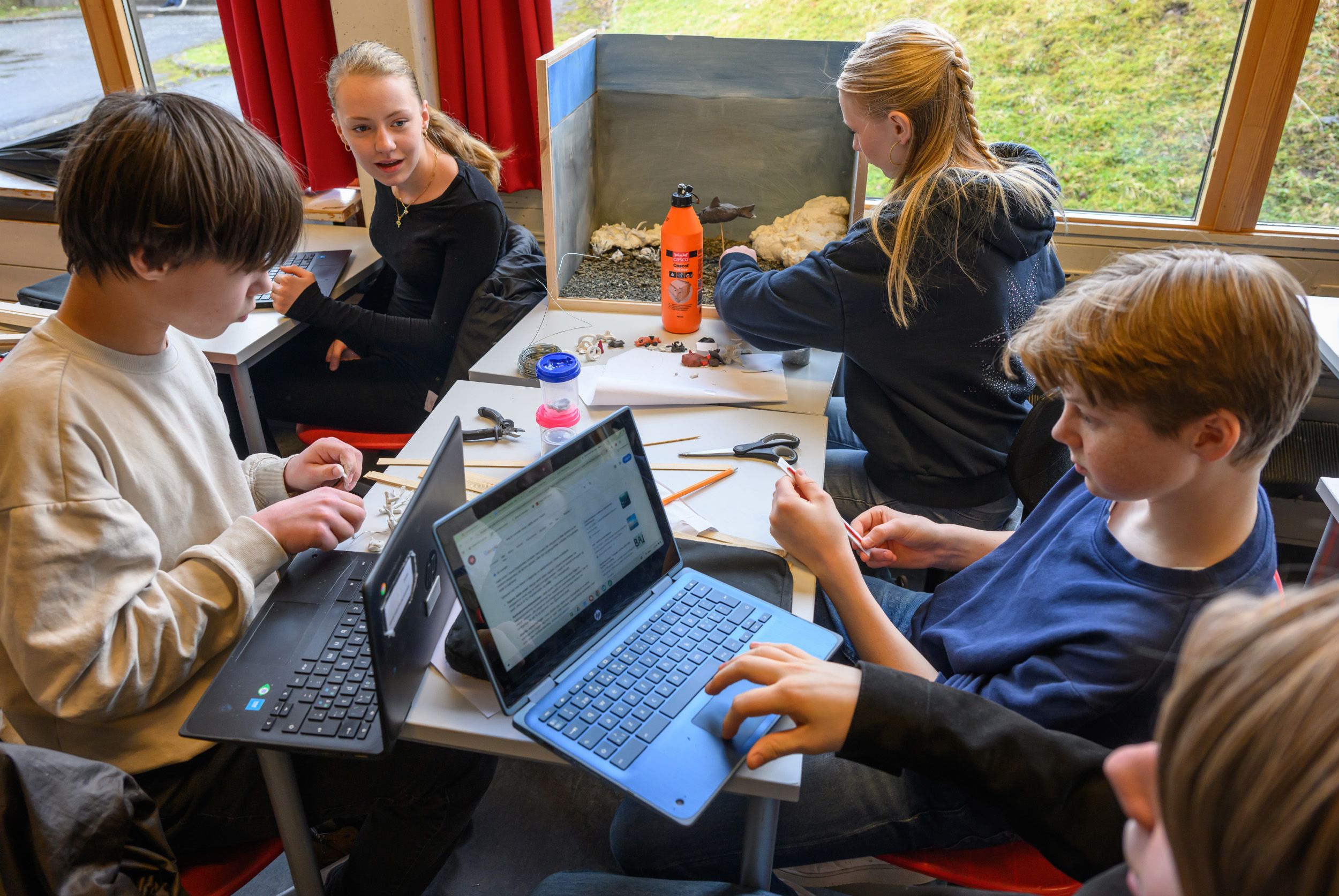
Full focus on their task. Photo: Ronald Toppe
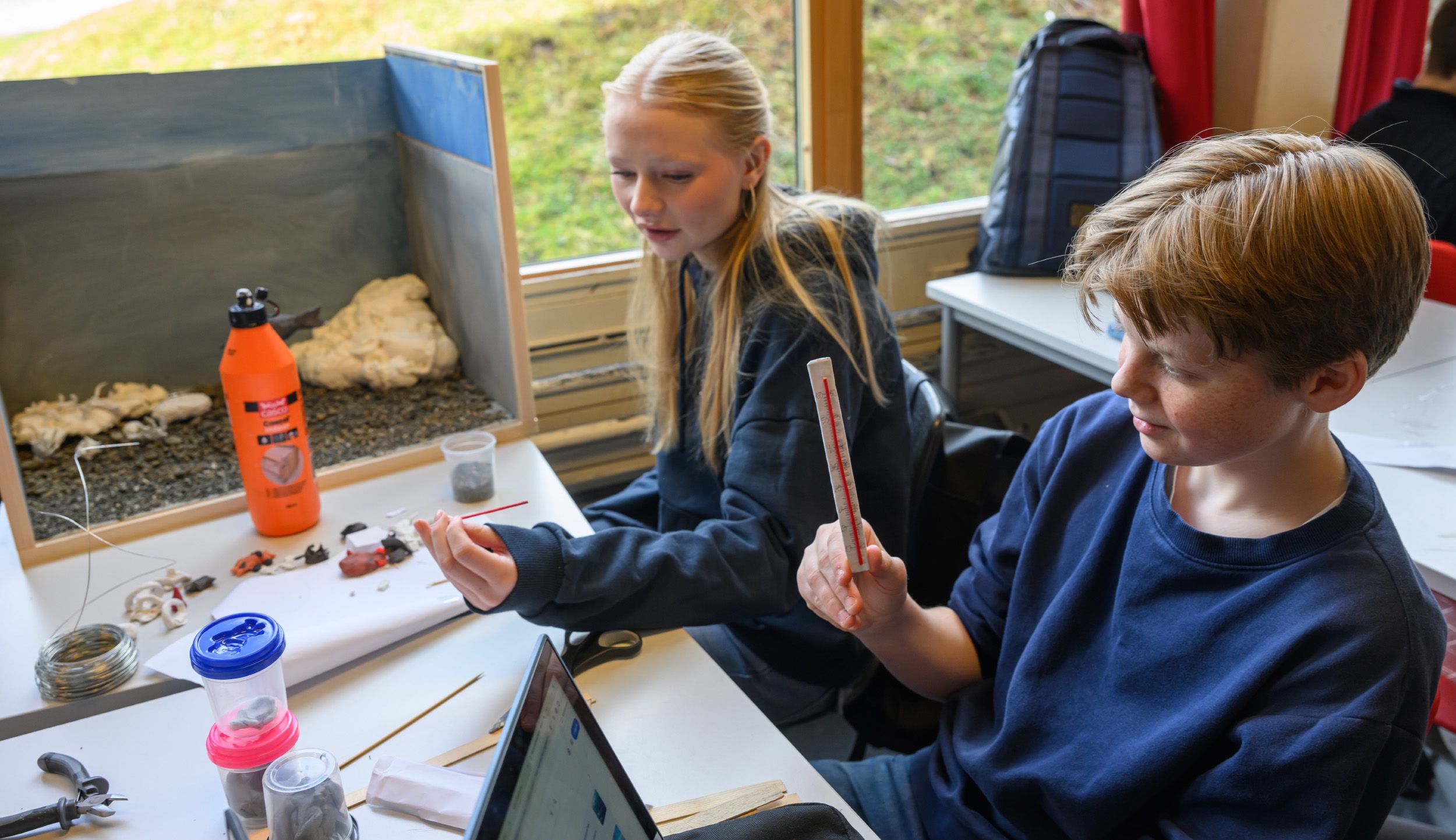
Victoria Alvilde Von Krogh and Johan Ludvig Halvorsen Kårbø are telling the story of a warming ocean. Photo: Ronald Toppe
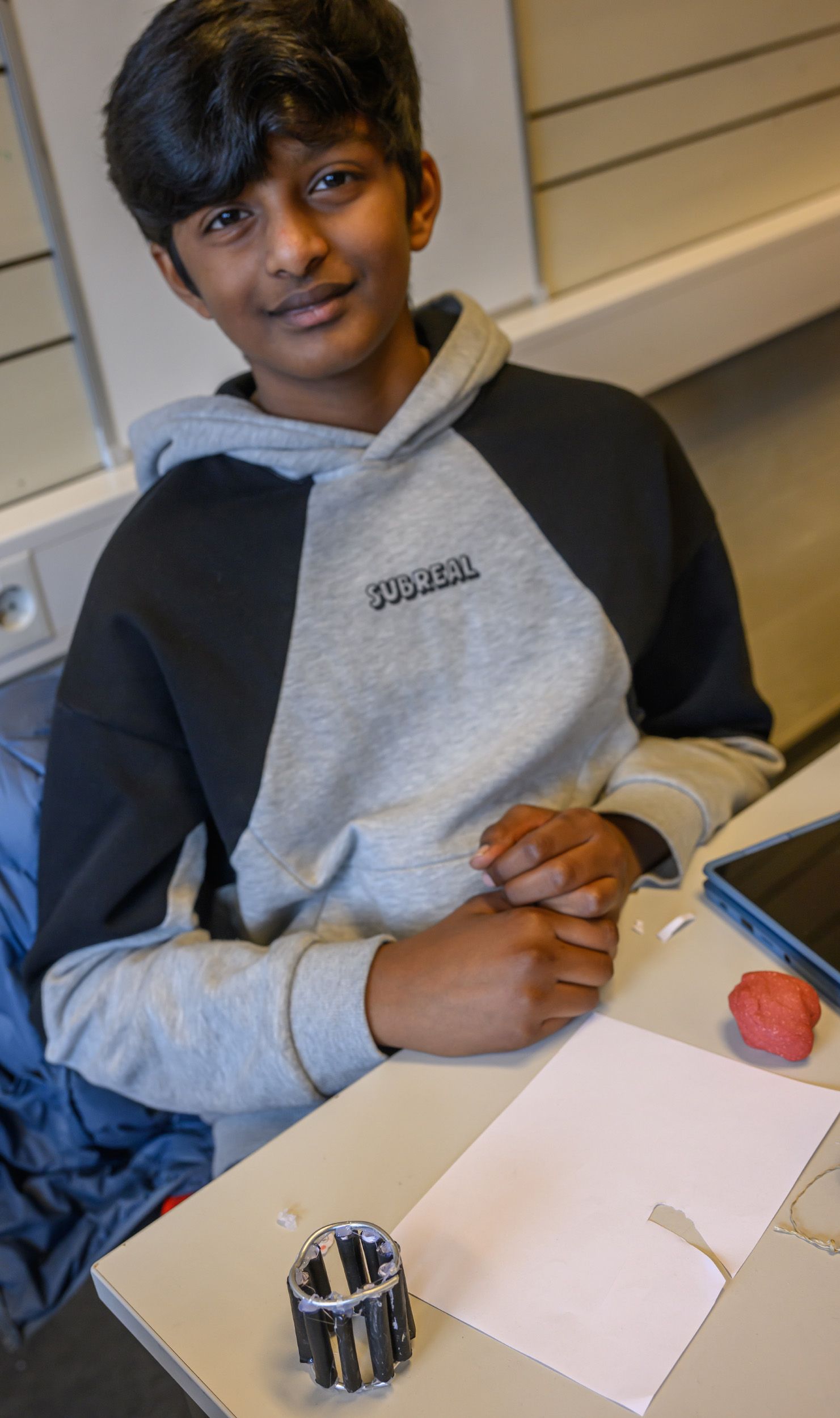
Jatin Yalamanchili has built a model of the “rosette”. Photo: Ronald Toppe
Johan Ludvig Halvorsen Kårbø holds up a thermometer made of wood. The red temperature column made by clay reaches all the way to the top. His group is working on the consequences of a warmer ocean. Jatin Yalamanchili has built a model of the “rosette”, the ring of tubes that is lowered from Statsraad Lehmkuhl to collect water samples deep below the ship.
An information booklet
Matilde Brosvik sits cross-legged on a desk with her group, typing intently on her laptop.
– In front of the display case there will be a small information booklet, she explains. This will be the text in the booklet.

The messages in bottles created by the students at Storetveit School will be formally presented to Captain Marcus Seidl on April 20 during a special youth event on board the ship. Students from Metis Upper Secondary School in Bergen will also participate.
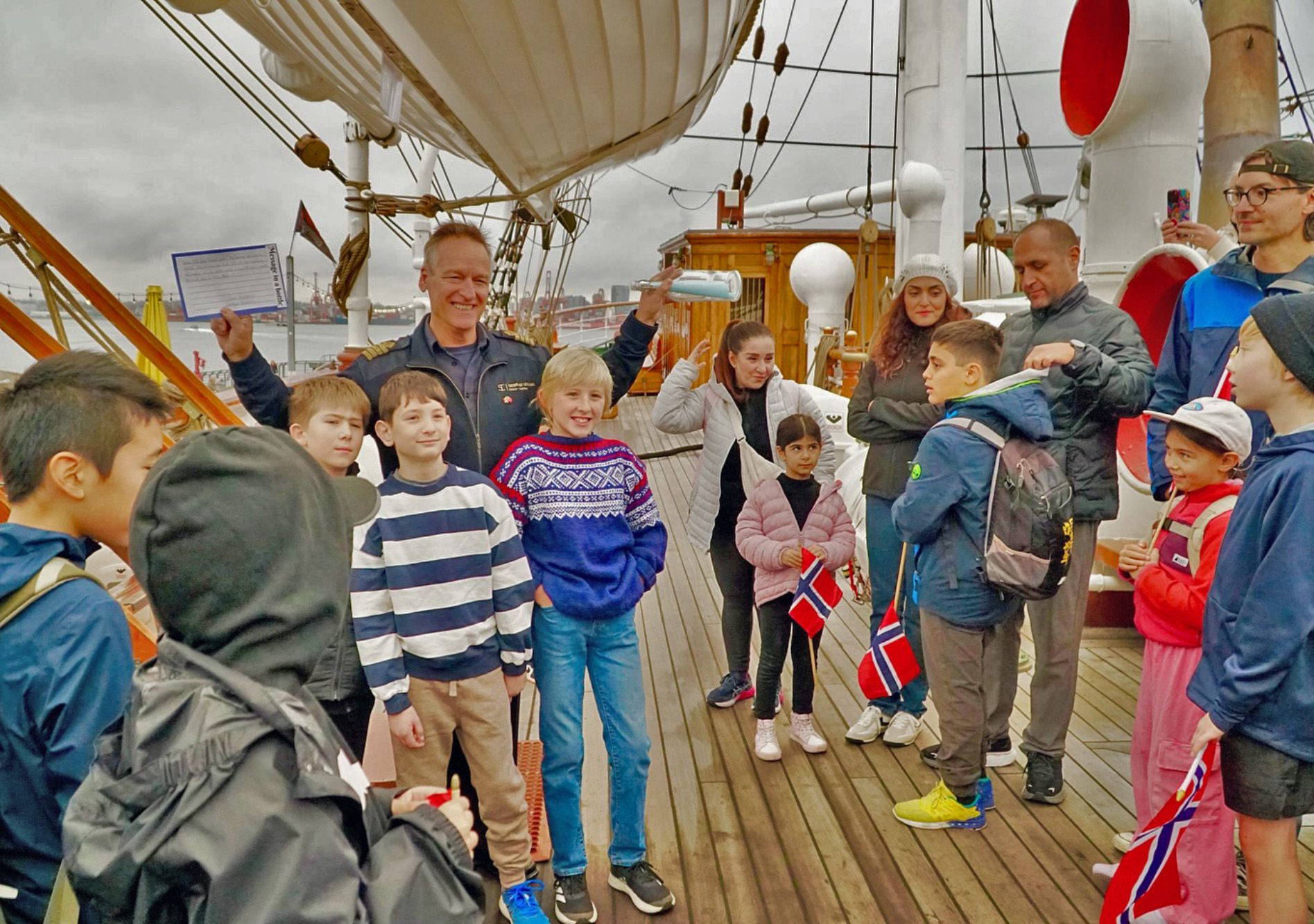
Students from Crosstown Elementary School in Vancouver presents their Message in a Bottle to Captain Marcus Seidl.
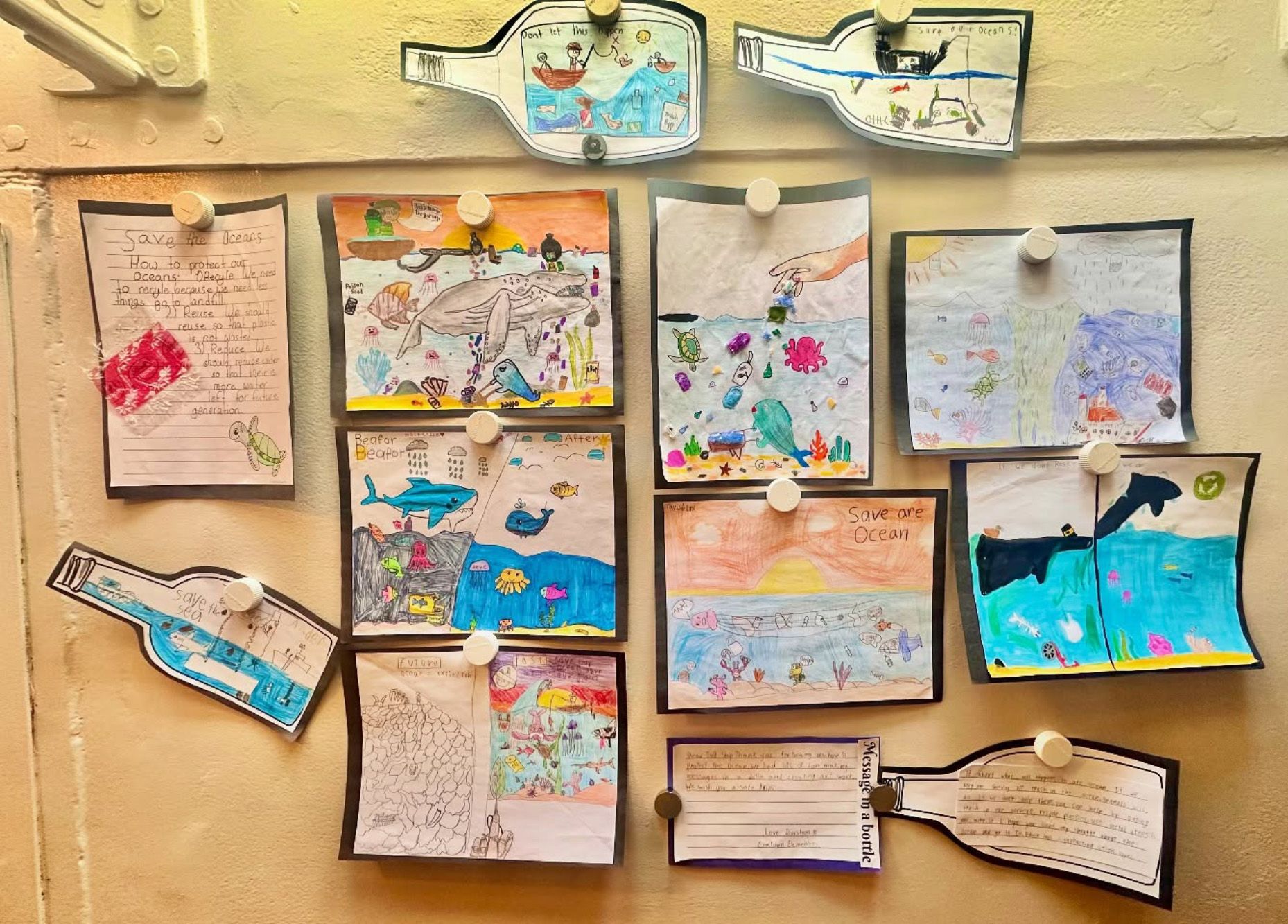
The Message in a Bottle made by students from Crosstown Elementary School in Vancouver.
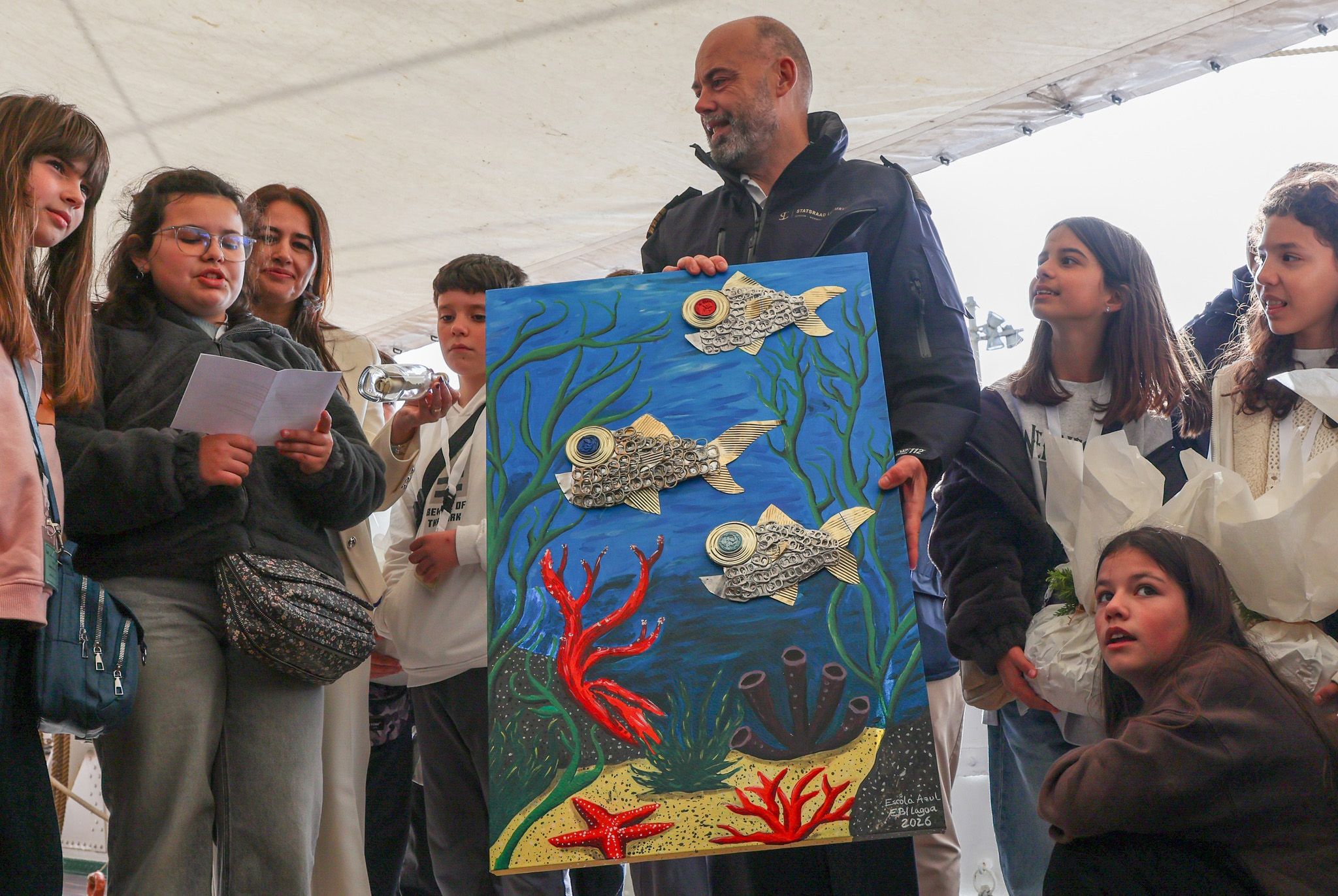
Students from Blue School EBI Lagoa visited Statsraad Lehmkuhl in Ponta Delgada, and presented their Message in a Bottle to Captain Jens Joachim Hiorth.
Similar presentations have taken place in several of the ports visited by Statsraad Lehmkuhl during the expedition. All the contributions have been brought on board, and a selection of them will be exhibited and can be experienced in the building at Statsraad Lehmkuhl’s permanent berth at Bradbenken.
Open April 18–24
The exhibition opens April 18, the same day Statsraad Lehmkuhl arrives in Bergen, and will be free and open throughout One Ocean Week, which lasts until April 24.
You can also see the contributions on the Message in a Bottle -website.